Care
Best Soil and pH for Kratom: Potting Mixes That Keep Roots Happy
Editorial Team Last updated
This page contains affiliate links. If you buy through them, the site may earn a commission at no extra cost to you.
Quick Answer
The best soil for kratom is a rich, organic potting mix that holds moisture but drains freely, kept slightly acidic at roughly pH 5.5–6.5. A simple recipe is quality potting mix with about 20–30% perlite and some compost or worm castings. Avoid heavy garden soil in pots. Test pH occasionally; Clemson Extension notes sulfur can lower pH and lime can raise it.
Key Facts
| Texture | Rich, moisture-holding, well-draining |
|---|---|
| Target pH | About 5.5–6.5 (slightly acidic; grower guidance) |
| Base mix | Quality potting mix or peat/coco-based mix |
| Drainage amendment | Perlite or pumice, ~20–30% |
| Organic matter | Compost or worm castings, ~10–20% |
| Lower pH / raise pH | Elemental sulfur / garden lime (Clemson HGIC) |
Choosing the best soil for kratom (opens in a new tab) comes down to copying the riverbank soils where Mitragyna speciosa grows wild: fertile, rich in organic matter, constantly moist, but never stagnant. In containers that means a loose, organic potting mix with extra drainage, kept slightly acidic. This guide gives practical mix recipes, explains how to test and adjust pH, and covers the soil mistakes that most often hurt kratom roots.
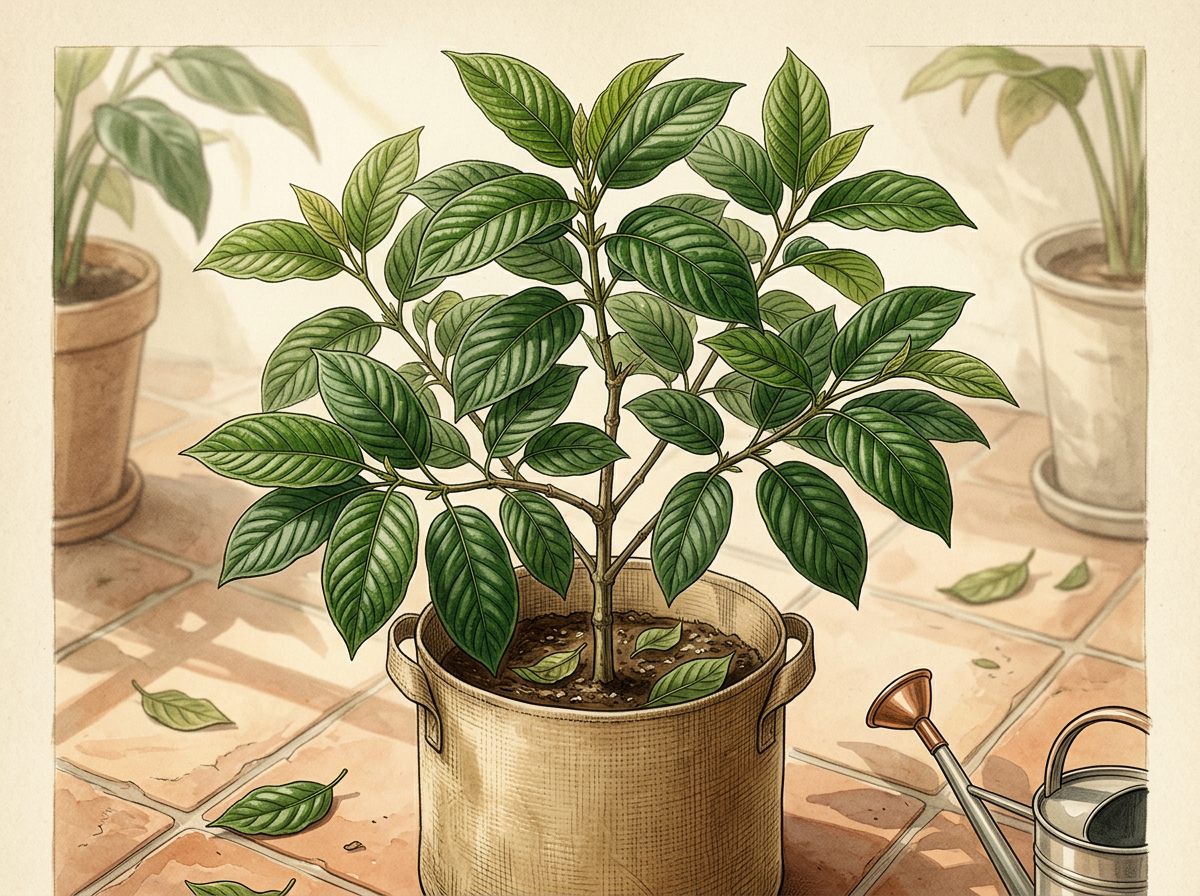
What kratom soil is like in the wild
Wild kratom favors alluvial soils along rivers, floodplains and swampy lowlands in Southeast Asia. Research in Indonesia's Kapuas Hulu district documented kratom production on both mineral soils and peat soils, the latter typically quite acidic. A 2022 survey of naturally growing kratom in Thailand identified soil moisture, soil pH and calcium among the environmental factors that differed across populations. Together these point to a tree that likes moist, fertile, somewhat acidic ground.
The ideal kratom potting mix
For containers, the goal is to balance moisture retention with air for the roots. A dependable starting recipe:
- 50–60% quality potting mix (peat- or coco-based)
- 20–30% perlite or pumice for drainage and air
- 10–20% compost or worm castings for organic matter and gentle nutrition
- Optional: a handful of fine orchid bark for structure in larger pots
The mix should feel springy and moist after watering, with excess water draining from the bottom of the pot within seconds, not minutes.
Mixes for different stages
- Seeds: Fine, sterile seed-starting mix, kept evenly damp; see growing from seed.
- Cuttings: Very airy media such as perlite, perlite-peat blends or rockwool; see cloning kratom.
- Young and mature trees: The full recipe above, refreshed when repotting.
Kratom soil pH
Growers commonly aim for a slightly acidic pH, roughly 5.5 to 6.5. That range is grower guidance rather than a value established by controlled research, but it matches the acidic tropical soils where kratom grows and the general range in which most nutrients stay available to plants. Peat-based mixes are naturally acidic; many commercial mixes add lime to bring them closer to neutral.
How to test pH
- Probe meters: Quick and inexpensive, but best used as a rough guide. Insert into moist soil and wipe the probe between readings. A basic soil pH meter (opens in a new tab) is enough for spot checks.
- Slurry test: Mix soil with distilled water, let it settle and test the liquid with a meter or test strips for a more reliable reading.
- Extension soil test: Many state extension offices offer affordable lab tests for outdoor beds.
How to adjust pH
Clemson Cooperative Extension explains that elemental sulfur lowers soil pH and lime raises it, and that both act gradually. In containers, it is usually simpler to repot into a fresh mix with the right starting pH than to make large adjustments. Make small changes, wait, and retest. Water quality matters too: very hard tap water can slowly push pH up, so some growers use rainwater or filtered water.
Drainage: the most important soil property
Kratom enjoys moisture, but roots sitting in stagnant water lose oxygen and can rot. Ensure:
- Every pot has drainage holes
- Saucers are emptied after watering
- The pot is not far too large for the root system
- The mix includes perlite or pumice
For watering frequency, see watering and humidity for kratom.
Planting kratom in the ground
Only growers in frost-free climates (roughly USDA zones 10b–11, such as Hawaii and South Florida) can plant kratom outdoors year-round. Choose a spot with rich, moist, well-drained soil and add plenty of compost. Sandy Florida soils benefit from organic matter to hold moisture; heavy clay needs amendment and raised planting to avoid waterlogging. See kratom grow zones.
Soil and nutrition
Even the best mix runs low on nutrients over time, especially in pots that are watered often. University of Florida researchers studied how nutrient fertility affects kratom growth, and the practical takeaway for home growers is to feed lightly and regularly during active growth. See how to fertilize kratom.
Common soil mistakes
- Using garden soil in pots: It compacts and drains poorly.
- Skipping perlite: Leads to soggy, airless roots.
- Never refreshing the mix: Old mix breaks down and compacts; repot every year or two.
- Chasing exact pH numbers: Small swings are normal; focus on overall plant health.
When roots fill the pot, move up one size with fresh mix; repotting and pruning kratom explains when and how.
Frequently Asked Questions
What pH does kratom prefer?
Growers commonly aim for slightly acidic soil, roughly pH 5.5–6.5. That is practical guidance rather than a research-established value.
Can I use regular potting soil for kratom?
Yes, if it is a quality mix. Adding about 20–30% perlite and some compost improves drainage and fertility.
How do I lower soil pH for kratom?
Clemson Extension notes elemental sulfur lowers pH gradually. In containers, repotting into a fresh, slightly acidic mix is often simpler.
Sources
- Changing the pH of Your Soil (HGIC 1650) (opens in a new tab) — Clemson Cooperative Extension, Home & Garden Information Center
- Variations in mitragynine content in the naturally growing Kratom (Mitragyna speciosa) population of Thailand — Leksungnoen et al. (2022) (opens in a new tab) — Frontiers in Plant Science 13:1028547
- Soil properties and heavy-metal levels in kratom production areas of Kapuas Hulu, West Kalimantan (opens in a new tab) — Indian Journal of Agricultural Research (ARCC Journals)
- Effects of Nutrient Fertility on Growth and Alkaloidal Content in Mitragyna speciosa (Kratom) — Zhang et al., Frontiers in Plant Science 11:597696 (2020) (opens in a new tab) — Frontiers in Plant Science (University of Florida researchers)
- USDA Plant Hardiness Zone Map (opens in a new tab) — USDA Agricultural Research Service
- Common grower experience (not a formal study) — Practices widely reported by hobby and nursery growers; treat as practical guidance rather than research findings
Written and reviewed by the Editorial Team. See editorial standards.
Related Guides
All guidesWatering and Humidity for Kratom: How Wet, How Often, How Humid
Keep soil evenly moist but never waterlogged, and hold humidity around 60–80% for young plants (50%+ for established trees).
Read guideHow to Fertilize Kratom: Feeding Schedule, NPK and Deficiency Signs
Feed a balanced or nitrogen-leaning fertilizer at a diluted rate every 2–4 weeks during active growth, and cut back in winter.
Read guideRepotting and Pruning Kratom: Keeping a Tall Tree Manageable
Repot one size up every 1–2 years in spring or summer, and prune growing tips just above a leaf pair to keep the tree compact and bushy.
Read guide