Propagation
How to Clone Kratom From Cuttings: Step-by-Step Propagation Guide
Editorial Team Last updated
This page contains affiliate links. If you buy through them, the site may earn a commission at no extra cost to you.
Quick Answer
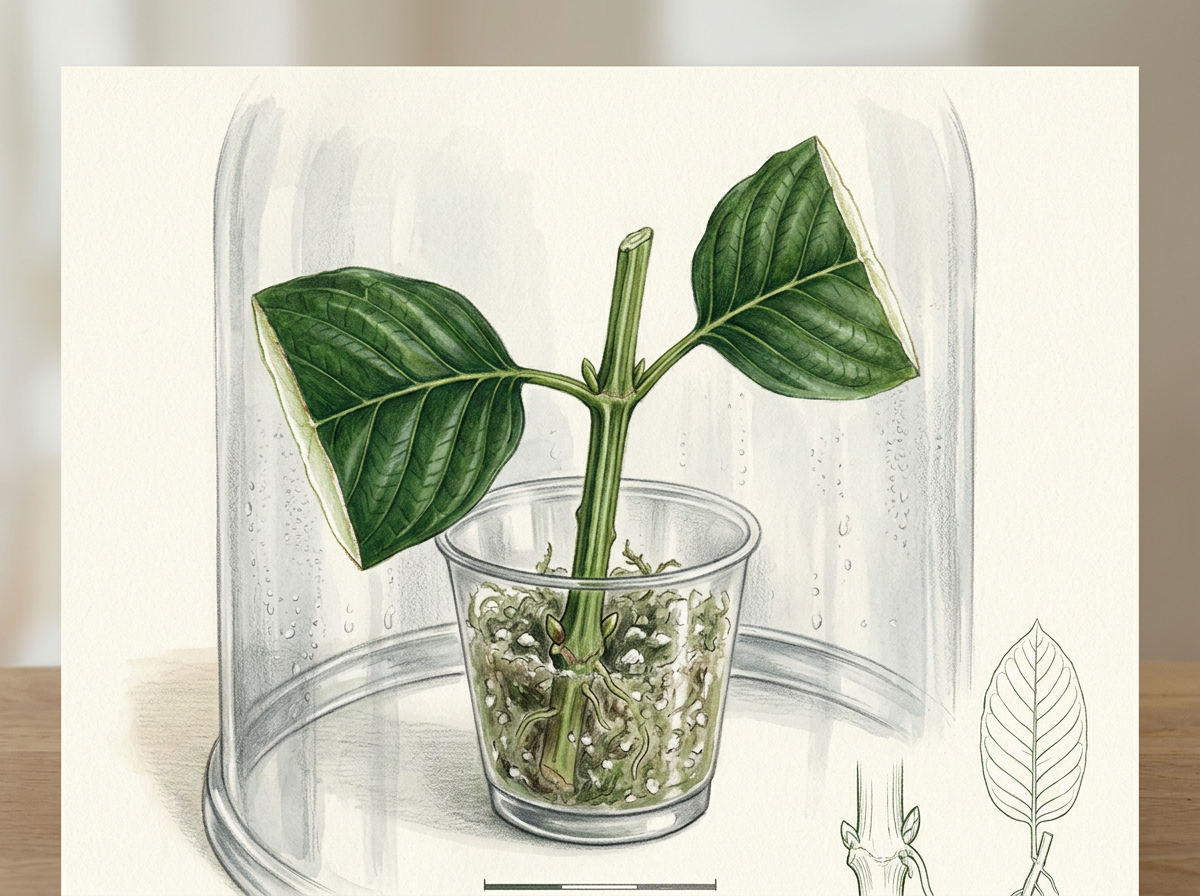
To clone kratom, cut a healthy 4–6 inch stem section with two or three leaf nodes, remove the lower leaves, trim the remaining leaves by about half, and optionally dip the base in rooting hormone. Insert it into a moist, airy rooting medium or an aeroponic cloner, then keep it warm (around 75–85°F) and very humid under a dome with about 14 hours of moderate light. Roots typically form over several weeks. A 2025 study reported 85–92% rooting for kratom cuttings in aeroponic systems.
Key Facts
| Cutting length | About 4–6 in (10–15 cm), 2–3 nodes |
|---|---|
| Leaves | Remove lower leaves; trim upper leaves by ~50% |
| Humidity | Very high — dome, bag tent or mist |
| Light | ~14 hours (rooted better than 10 hours in a 2025 study) |
| Rooting hormone | Optional; IBA/NAA increased root number in the study |
| Aeroponic rooting rate | 85–92% (2025 study) |
Learning how to clone kratom (opens in a new tab) is one of the most useful skills for a grower. Cloning means rooting a piece of stem from an existing plant so it grows into a new tree that is genetically identical to its parent. Because kratom seeds are often unreliable, cuttings are how many growers multiply plants. Kratom has a reputation for being difficult to root in soil, but research on aeroponic systems and careful humidity control have made it far more predictable.
Why clone instead of growing from seed?
- Identical plants: A clone copies the parent tree exactly, while every seedling is unique.
- Faster start: Cuttings begin as established stems and skip the fragile seedling stage.
- Seed problems avoided: Kratom seeds lose viability quickly and germinate unevenly; see how to grow kratom from seed.
What the research says
A 2025 study in Frontiers in Plant Science tested kratom cuttings in aeroponic systems, which suspend the stem bases in air and spray them with a fine nutrient or water mist. Key findings:
- Aeroponic cuttings rooted at 85–92%, far more consistently than mist systems, which ranged from 7% to 98% depending on the season.
- A 14-hour photoperiod produced better rooting than a 10-hour photoperiod.
- Rooting hormones (IBA and NAA) increased the number of roots but were not needed for cuttings to root.
- Cultivar mattered: a Malaysian line labeled MR performed best.
For home growers, the lesson is that consistent moisture and air at the stem base, high humidity around the leaves, and adequate light matter more than any single product.
What you need
- A healthy, actively growing parent plant
- Clean, sharp pruning shears or a blade (wipe with rubbing alcohol)
- Rooting medium: perlite, a perlite-and-peat or coco mix, rockwool cubes, or an aeroponic cloner
- Small pots or a cell tray with drainage
- A humidity dome or clear plastic bag
- Optional: rooting hormone powder (opens in a new tab) or gel
- Optional: a seedling heat mat and an LED light on a timer
Step-by-step: cloning kratom in a humidity dome
- Water the parent plant the day before so stems are fully hydrated.
- Choose a stem. Pick healthy, semi-firm growth (not the softest tip and not old woody wood) with two or three leaf nodes.
- Cut a 4–6 inch section just below a node, using a clean, sharp tool. NC State Extension recommends taking cuttings in the morning when plants are turgid.
- Remove the lower leaves and trim the remaining leaves by about half to reduce water loss. Kratom leaves are large, so this step is important.
- Apply rooting hormone (optional). Dip the cut end in powder or gel, tapping off excess.
- Insert the cutting into a pre-moistened rooting medium, making a hole first so hormone is not wiped off. Firm the medium gently.
- Cover with a dome or bag to keep humidity near saturation. Mist the inside if it dries out.
- Keep warm and lit. Aim for roughly 75–85°F (24–29°C) at the base and about 14 hours of moderate, indirect light.
- Vent daily for a minute or two to refresh air and check for mold.
- Wait for roots. New leaf growth and resistance to a gentle tug are signs of rooting, usually after several weeks.
Aeroponic and water cloning
An aeroponic cloner holds cuttings in foam collars above a reservoir with a pump that sprays the stem bases. It matches the method used in the 2025 study and often gives the most consistent results. Keep the reservoir clean, the water fresh and the unit in a warm room. Some growers also root cuttings in plain water; this can work but tends to produce fragile roots that need careful transition to soil.
Common problems and fixes
- Leaves wilting: Humidity too low; reseal the dome and mist.
- Stem base turning black and mushy: Medium too wet or unclean; use a more airy mix and sterile tools.
- Mold on leaves or medium: Vent more often and remove affected material.
- No roots after many weeks: Check temperature at the base and light hours; try semi-firm stems from a vigorous parent.
- Leaves dropping: Some drop is normal; a green stem can still root.
Transplanting rooted cuttings
Once roots are a few inches long, move the cutting into a small pot of rich, well-draining mix. Keep it under the dome or in high humidity for another week or two, then wean it gradually by opening the vents a little more each day. The soil guide covers the right mix, and watering and humidity explains how to avoid shock.
Best time of year to clone
Kratom roots best during active growth, when temperatures are warm and days are long. Indoors under lights and with a heat mat, cloning can work year-round. The 2025 study's finding that mist-system results swung widely by season is a reminder that stable conditions matter most.
Next steps
A rooted clone follows the same path as any young kratom tree. Read how to grow kratom indoors for care, how many hours of light kratom needs for light schedules, and the complete grow guide for the full journey.
Frequently Asked Questions
Do kratom cuttings need rooting hormone?
No. A 2025 study found rooting hormones increased the number of roots but were not required for kratom cuttings to root.
How long do kratom cuttings take to root?
Usually several weeks, depending on warmth, humidity, light and the method used. Aeroponic systems often root most consistently.
Can kratom cuttings root in water?
Sometimes, but water roots are often fragile. A humidity dome with an airy medium or an aeroponic cloner is usually more reliable.
Sources
- Aeroponics enables consistent cutting propagation of kratom (Mitragyna speciosa): impacts of photoperiod, cultivar, and rooting hormone (2025) (opens in a new tab) — Frontiers in Plant Science
- Plant Propagation by Stem Cuttings: Instructions for the Home Gardener (opens in a new tab) — NC State Extension
- Extension Gardener Handbook, Chapter 13: Propagation (opens in a new tab) — NC State Extension
- Lighting for indoor plants (opens in a new tab) — University of Minnesota Extension
- Common grower experience (not a formal study) — Practices widely reported by hobby and nursery growers; treat as practical guidance rather than research findings
Written and reviewed by the Editorial Team. See editorial standards.
Related Guides
All guidesHow to Grow Kratom From Seed: Germination Step by Step
Use very fresh seed, surface-sow it on fine moist mix, and keep it warm, humid and lit under a dome.
Read guideBuying Kratom Plants and Seeds: Nurseries, Private Growers and What to Check
Buy a rooted plant or cutting from a nursery that ships legally to your state; seeds are cheap but often fail because they lose viability fast.
Read guideHow Many Hours of Light Does Kratom Need? Light Schedules by Stage
About 12–16 hours of light a day indoors, with a consistent dark period; cuttings root better at 14 hours than at 10.
Read guide