Care
How to Grow Kratom Indoors: Light, Humidity and Space Setup
Editorial Team Last updated
This page contains affiliate links. If you buy through them, the site may earn a commission at no extra cost to you.
Quick Answer
Yes, kratom can be grown indoors year-round. Give it a full-spectrum LED grow light for 12–16 hours a day, hold humidity at 60–80% with a humidifier or grow tent, keep temperatures between 70 and 85°F, add gentle airflow, and use a draining container with rich, slightly acidic soil.
Key Facts
| Light | Full-spectrum LED, 12–16 hours daily |
|---|---|
| Temperature | 70–85°F (21–29°C), nights above 65°F |
| Humidity | 60–80% |
| Airflow | Small oscillating fan on low |
| Container | Fabric or plastic pot with drainage |
| Space | Plan for 4–7 ft of height within a few years |
Figuring out how to grow kratom indoors (opens in a new tab) is mostly about controlling three things that the tropics provide for free: light, warmth and humidity. Can you grow kratom indoors successfully? Yes — many growers keep their trees inside permanently, and in cold climates an indoor setup is the only way to keep the tree alive through winter. The trade-off is that every condition must be supplied deliberately.
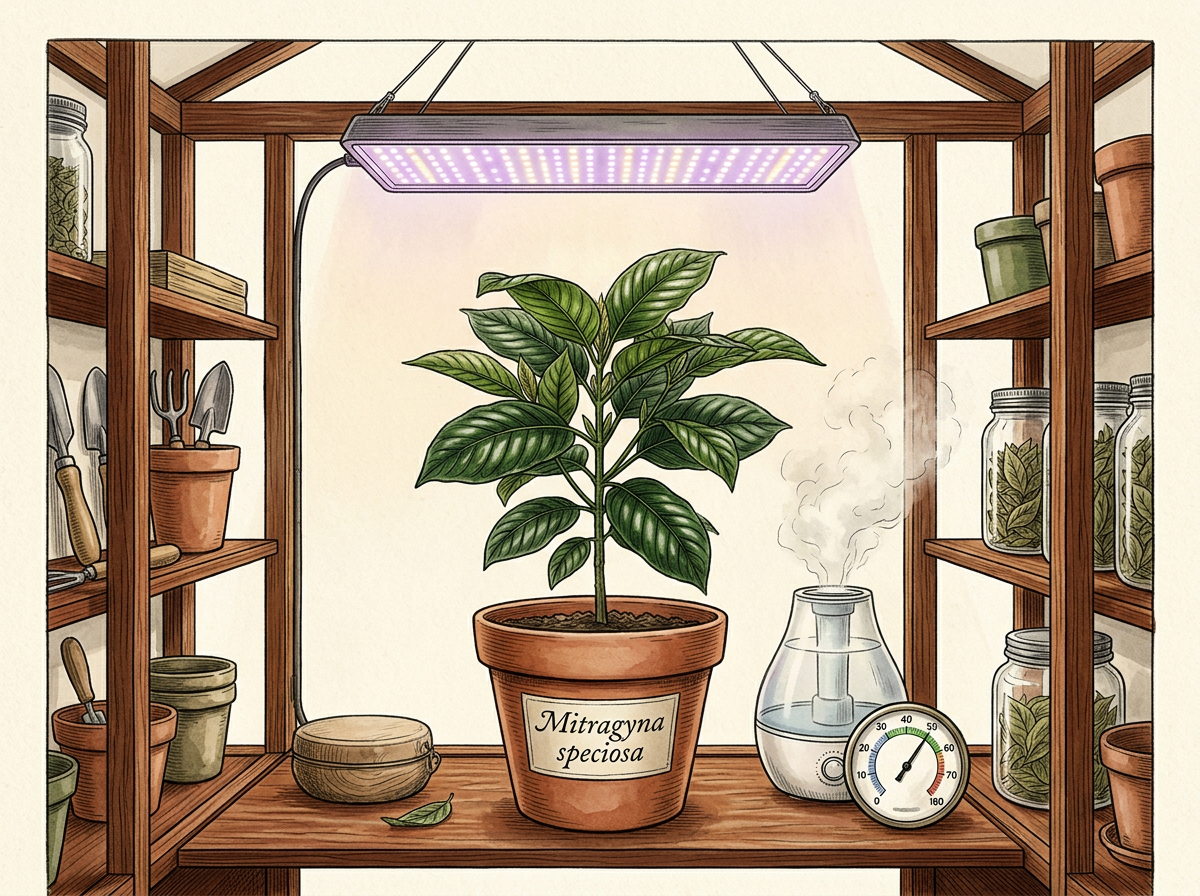
Choose your indoor space
There are three common setups, each with advantages:
- Bright window + supplemental LED. The simplest option. A south- or west-facing window provides natural light, and a clip-on or hanging LED fills in on cloudy days and in winter.
- Grow tent. A reflective tent holds humidity and heat, keeps light where it is useful, and simplifies pest control. A 2x2 or 3x3 tent suits a young tree; larger trees need more height.
- Dedicated room corner. A tall tree under a hanging LED panel with a humidifier nearby. This works best in rooms that stay warm year-round.
Lighting: the most important upgrade
Window light alone is rarely enough for vigorous growth, especially in winter at northern latitudes. A full-spectrum LED grow light provides consistent intensity without the heat of older lighting types. The University of Minnesota Extension recommends LEDs for indoor plants because of their efficiency and long lifespan.
- Pick full-spectrum white light. Balanced white spectrum supports leafy growth at every stage and makes it easier to spot pests and leaf problems.
- Set the right distance. Follow the manufacturer's recommendation. As a rule of thumb, foliage plants are often kept 12–24 inches below the light.
- Use a timer. Run lights 12–16 hours per day. A timer keeps the schedule consistent, which matters more than occasional long days. See the light hours guide.
- Watch the leaves. Pale, bleached patches mean too much intensity; long gaps between leaf pairs mean too little.
Research supports keeping intensity moderate. A 2022 PLoS ONE study from University of Florida researchers found that kratom grown under shaded greenhouse conditions produced larger leaves and more total leaf mass than plants grown in open field sun. Indoor growers do not need the most powerful light available — consistent, moderate light is the goal.
Humidity: keep the air tropical
Indoor air in heated or air-conditioned homes often sits between 20% and 40% humidity, far below what kratom prefers. Low humidity causes crispy brown leaf edges, curling and higher spider mite pressure.
- Run a cool-mist humidifier near the plant, set to hold 60–80%.
- Place a digital hygrometer at leaf height to measure, rather than guess.
- Group plants together to create a humid microclimate.
- Use a pebble tray under smaller pots for a modest boost.
For more on balancing humidity and watering, see the watering and humidity guide.
Temperature: steady warmth
Aim for 70–85°F (21–29°C) during the day and above 65°F at night. Keep the plant away from cold windows in winter, exterior doors, and air-conditioning vents. A small space heater with a thermostat can stabilize a grow tent, but never place heaters close enough to dry or scorch leaves.
Airflow: the overlooked essential
High humidity without air movement invites mold and fungus gnats. A small oscillating fan on its lowest setting keeps air moving gently around the canopy. Leaves should flutter slightly, not whip around. Airflow also strengthens stems, producing a sturdier tree.
Containers and soil
Use a pot with drainage holes and a rich, airy, slightly acidic mix. Fabric pots are popular indoors because they reduce the risk of soggy roots. Place a saucer underneath, and empty it after watering so roots never sit in water. The soil and pH guide has recipes.
Watering indoors
Indoor trees use less water than outdoor trees in summer, but more than most houseplants. Water when the top inch of soil feels dry, soaking until water drains from the bottom. In winter, when light and warmth decrease, check more carefully before watering — cool, wet soil is a recipe for root rot.
Managing height indoors
Kratom wants to grow tall. Indoors, pinch or prune the growing tip once the tree reaches the height you want, which redirects energy into side branches. This keeps the tree under the light and produces a fuller canopy. The pruning guide explains technique.
Pest prevention indoors
Indoor environments lack the predators that keep pests in check outdoors. Inspect the undersides of leaves weekly, especially in dry air. Spider mites, aphids, mealybugs and fungus gnats are the usual suspects. Quarantine new plants for two weeks before placing them near your kratom. See kratom pests and diseases.
Sample indoor setup checklist
- Full-spectrum LED on a timer (12–16 hours)
- Cool-mist humidifier and a digital hygrometer
- Small oscillating fan
- Draining pot with saucer, rich airy soil
- Thermometer at plant level
- Weekly leaf inspection routine
With this setup in place, indoor kratom can grow steadily year-round. Growers who want to compare equipment options will find notes in the growing supplies reviews.
Frequently Asked Questions
Can you grow kratom indoors without a grow light?
It is possible in a very bright south-facing window, but growth is usually slow, especially in winter. Most indoor growers add a full-spectrum LED for consistent results.
What humidity does indoor kratom need?
Aim for 60–80% relative humidity at leaf level. A cool-mist humidifier and a digital hygrometer make this easy to maintain.
Do indoor kratom trees need a fan?
Gentle airflow is strongly recommended. It reduces mold and fungus gnat problems in humid conditions and helps stems grow sturdier.
Sources
- Lighting for indoor plants (opens in a new tab) — University of Minnesota Extension
- Plant growth and phytoactive alkaloid synthesis in kratom [Mitragyna speciosa (Korth.)] in response to varying radiance — Zhang et al., PLoS ONE 17(4): e0259326 (2022) (opens in a new tab) — PLoS ONE
- Extension Gardener Handbook (opens in a new tab) — NC State Extension
- Common grower experience (not a formal study) — Practices widely reported by hobby and nursery growers; treat as practical guidance rather than research findings
Written and reviewed by the Editorial Team. See editorial standards.
Related Guides
All guidesGrow Kratom at Home: A Practical Setup for Apartments and Houses
Pick a bright, warm spot, add a humidifier and a grow light, and build a simple weekly care routine.
Read guideHow Many Hours of Light Does Kratom Need? Light Schedules by Stage
About 12–16 hours of light a day indoors, with a consistent dark period; cuttings root better at 14 hours than at 10.
Read guideWatering and Humidity for Kratom: How Wet, How Often, How Humid
Keep soil evenly moist but never waterlogged, and hold humidity around 60–80% for young plants (50%+ for established trees).
Read guide