Care
Repotting and Pruning Kratom: Keeping a Tall Tree Manageable
Editorial Team Last updated
This page contains affiliate links. If you buy through them, the site may earn a commission at no extra cost to you.
Quick Answer
Kratom can grow into a very tall tree, so container growers rely on repotting and pruning to keep it healthy and manageable. Repot one pot size larger every one to two years during warm, active growth, or whenever roots circle the pot. Prune by cutting just above a pair of leaves with clean, sharp bypass shears; this encourages two new shoots and a bushier shape. Avoid heavy pruning before winter or immediately after repotting.
Key Facts
| Repot frequency | Every 1–2 years, or when root-bound |
|---|---|
| Pot size step | About 2–4 in (5–10 cm) wider each time |
| Best season | Spring to summer, during active growth |
| Where to cut | Just above a leaf pair (node) |
| Tool | Clean, sharp bypass pruners |
| Avoid | Heavy pruning before winter or right after repotting |
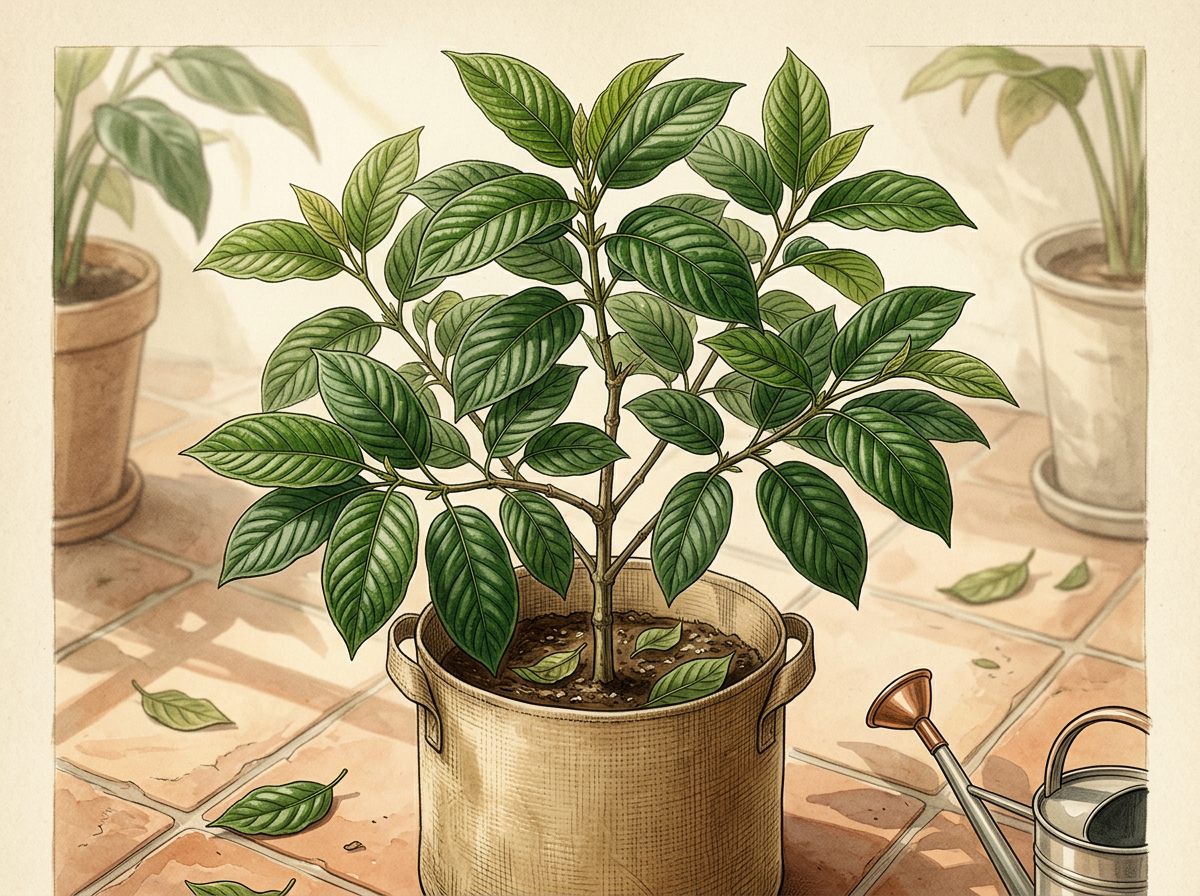
Pruning a kratom tree (opens in a new tab) and repotting it on schedule are the two main ways to keep Mitragyna speciosa healthy in a container. In the wild, kratom can grow into a tall forest tree, and even indoors a happy plant can outgrow a room. Thoughtful pruning creates a fuller, bushier shape, while timely repotting gives roots fresh soil and space. This guide explains when and how to do both without setting the plant back.
Part 1: Repotting kratom
Signs it is time to repot
- Roots circling the inside of the pot or growing out of drainage holes
- Water running straight through without soaking in
- Soil drying out much faster than it used to
- Growth slowing during the warm season despite good care
- Old potting mix that has broken down and compacted
When to repot
Repot during warm, active growth — spring through mid-summer is ideal. Roots recover quickly at that time. Avoid repotting just before or during winter, when growth is slow.
Choosing the next pot
Move up gradually, choosing a pot about 2–4 inches (5–10 cm) wider than the current one. A pot that is far too large holds excess wet soil around a small root system, raising the risk of root rot. Every pot must have drainage holes. Fabric pots encourage a fibrous root system, plastic holds moisture longer, and heavy ceramic or terracotta pots help stabilize tall trees.
How to repot, step by step
- Water the day before so the root ball holds together.
- Prepare fresh mix: rich potting mix with perlite and some compost; see best soil for kratom.
- Remove the plant by tipping the pot and easing it out; squeeze flexible pots or run a knife around the edge.
- Inspect the roots. Healthy roots are white to light tan. Trim any dark, mushy roots with clean shears, and gently loosen circling roots.
- Set the plant at the same depth it grew before, on a base layer of fresh mix.
- Fill in around it, firming gently to remove large air pockets.
- Water thoroughly and let it drain.
- Aftercare: keep the plant out of harsh sun, keep humidity up, and wait three to four weeks before fertilizing.
Some leaf droop for a few days is normal. See watering and humidity for kratom for aftercare.
Part 2: Pruning kratom
Why prune?
- Control height so the tree fits indoors or under lights
- Encourage branching for a fuller, bushier plant with more leaves within reach
- Remove damaged or diseased growth
- Improve airflow through dense growth, reducing fungal problems
How kratom responds to cuts
Kratom leaves grow in opposite pairs along the stem. When the growing tip is removed just above a leaf pair, buds at that node typically wake up and produce two new shoots. Repeating this over time turns a single tall stem into a branched, bushy plant. NC State Extension's general pruning guidance applies: make clean cuts just above a node, without leaving long stubs that can die back.
Tools
Use sharp bypass pruners, which cut cleanly like scissors rather than crushing stems. A pair of bypass pruning shears (opens in a new tab) is sufficient for most potted kratom; small snips handle soft growth. Wipe blades with rubbing alcohol between plants to avoid spreading disease.
Step-by-step pruning
- Decide on a target height and shape before cutting.
- Find a leaf pair just below where you want the stem to end.
- Cut about 1/4 inch (6 mm) above the node, at a slight angle.
- Remove any dead, damaged or crossing branches back to healthy tissue or the main stem.
- Do not remove more than about a quarter to a third of the foliage at once; the leaves are the plant's food factory.
- Save healthy trimmings as cuttings; see how to clone kratom from cuttings.
When to prune
Prune during warm, active growth, when the plant can quickly replace lost leaves. Light tip pruning can be done any time the plant is growing well. Avoid heavy pruning in late fall and winter, and do not repot and heavily prune at the same time, since the combination can overstress the plant.
Managing a tree that has outgrown its space
If a tree is touching the ceiling, prune it back in stages over several weeks rather than all at once. For very large trees, some growers root cuttings to start a fresh, smaller plant. The tree size guide explains how big kratom can get in containers and outdoors.
Pruning and leaf harvest
Picking mature leaves is a form of light pruning, and growers often shape a tree as they harvest. Leaf picking should follow the same principle of never removing too much at once. See harvesting kratom leaves for a gardening perspective on timing.
Frequently Asked Questions
How often should kratom be repotted?
Every one to two years, or whenever roots circle the pot or grow out of drainage holes. Repot in spring or summer, one size up.
Where should I cut when pruning kratom?
Cut about 1/4 inch above a pair of leaves with clean, sharp bypass pruners. Buds at that node usually produce two new shoots.
Can I prune and repot kratom at the same time?
It is better not to. Doing both at once can overstress the plant; repot first and wait several weeks before heavy pruning.
Sources
- Extension Gardener Handbook (opens in a new tab) — NC State Extension
- Extension Gardener Handbook, Chapter 13: Propagation (opens in a new tab) — NC State Extension
- Changing the pH of Your Soil (HGIC 1650) (opens in a new tab) — Clemson Cooperative Extension, Home & Garden Information Center
- Mitragyna speciosa Korth. — Plants of the World Online (opens in a new tab) — Royal Botanic Gardens, Kew
- Common grower experience (not a formal study) — Practices widely reported by hobby and nursery growers; treat as practical guidance rather than research findings
Written and reviewed by the Editorial Team. See editorial standards.
Related Guides
All guidesHow Big Do Kratom Trees Grow? Wild, Outdoor and Container Sizes
Wild trees can exceed 15 m (about 50 ft); container trees are usually kept at 4–10 ft.
Read guideBest Soil and pH for Kratom: Potting Mixes That Keep Roots Happy
A rich, well-draining potting mix with plenty of organic matter and perlite, kept slightly acidic at roughly pH 5.5–6.5.
Read guideWhen and How to Harvest Kratom Leaves: A Gardener's Guide
Wait until the tree is large and vigorous, pick fully mature leaves by hand, and never remove more than a small share of foliage at once.
Read guide