Mature Trees & Harvest
When and How to Harvest Kratom Leaves: A Gardener's Guide
Editorial Team Last updated
This page contains affiliate links. If you buy through them, the site may earn a commission at no extra cost to you.
Quick Answer
Harvesting kratom leaves is best left until a tree is well established, large and growing vigorously — often after a couple of years for a potted plant. Pick fully expanded, mature leaves by hand or with clean snips, working from different parts of the tree, and never remove more than about a quarter of the foliage at one time. Leaves can be air-dried in a warm, shaded, well-ventilated place and stored in an airtight container away from light and moisture.
Key Facts
| Tree readiness | Large, vigorous, established (often 2+ years in pots) |
|---|---|
| Leaves to pick | Fully expanded, mature leaves |
| Maximum per session | About 25% of foliage or less |
| Method | Hand-pick or snip at the leaf stalk |
| Drying | Warm, shaded, well-ventilated space |
| Storage | Airtight, dark, dry, cool |
Harvesting kratom leaves (opens in a new tab) is the stage many growers look forward to, but timing and restraint matter more than anything else. Mitragyna speciosa is a tree, not an annual crop, and every leaf removed is one less leaf feeding the plant. This guide approaches harvest from a gardening perspective: how to tell when a tree can spare leaves, how to pick without harming it, and how leaves are typically dried and stored. It does not cover consumption, preparation or use, and nothing here is health advice.
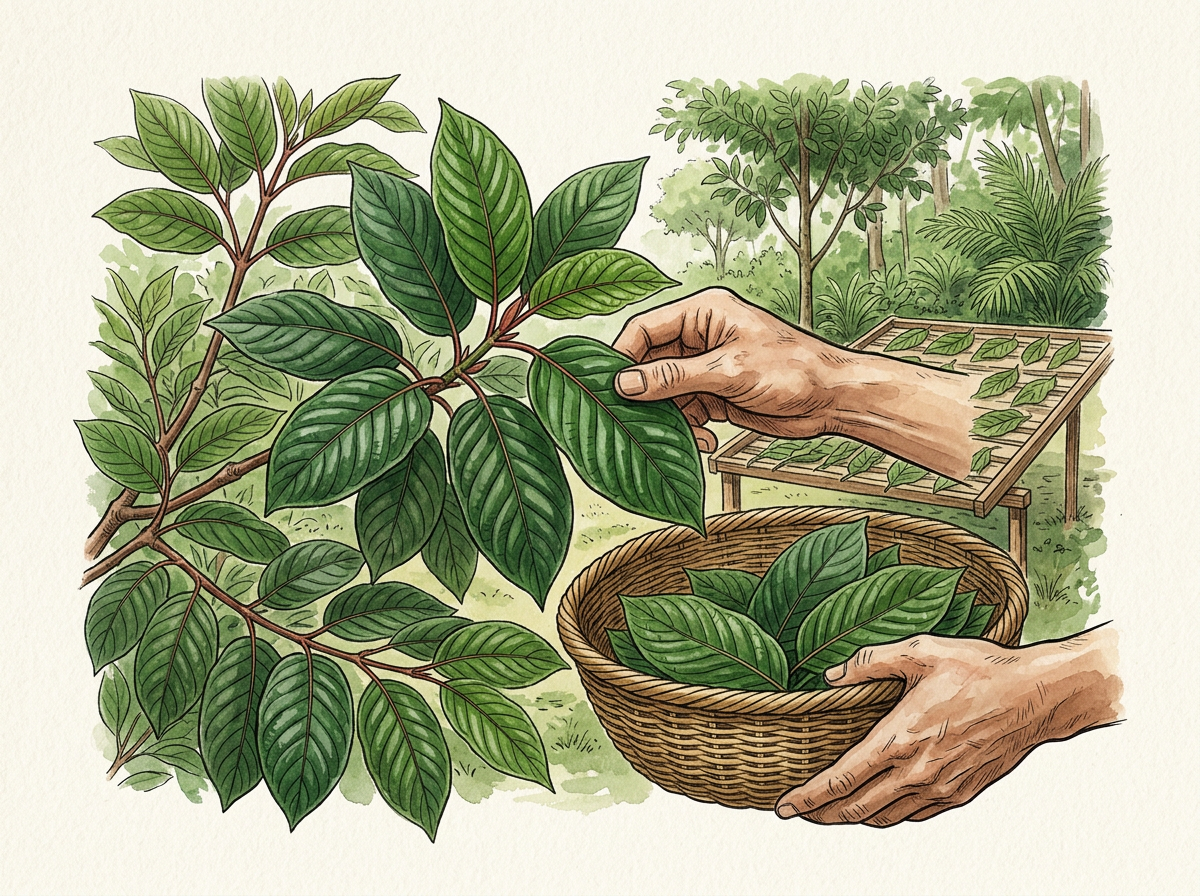
Is the tree ready?
A young kratom plant needs its leaves to grow. Picking too early slows growth dramatically and can weaken the plant. Signs that a tree can spare some leaves:
- It is well established, with a sturdy, woody lower stem
- It is growing vigorously, producing new leaf pairs regularly in the warm season
- It has a full canopy with many mature leaves
- It has recovered from any recent repotting, pruning or pest problems
For a potted plant, this often means waiting a couple of years or more. The growth timeline guide explains typical development by stage.
Which leaves to pick
Choose fully expanded, mature leaves — typically the larger, darker leaves below the newest growth. Leave the soft, young leaves at the tips to keep growing. Avoid leaves that are damaged, diseased or covered in pests; those can be removed separately as part of routine care.
How to harvest without harming the tree
- Use clean hands or snips. Wipe snips with rubbing alcohol before starting.
- Pick at the leaf stalk (petiole), pinching or snipping close to the stem without tearing the bark.
- Spread the harvest across different branches instead of stripping one area bare.
- Take no more than about a quarter of the foliage in a session, and less from smaller trees.
- Allow recovery time — several weeks or more — before harvesting again, watching for strong new growth.
Harvesting can double as light pruning. Removing a growing tip just above a leaf pair encourages branching; see repotting and pruning kratom.
Best time to harvest
- Season: During warm, active growth, when the tree replaces leaves quickly. Avoid heavy picking in winter.
- Time of day: Many gardeners pick leaves in the morning, after dew dries, when plants are well hydrated.
- Plant condition: Harvest only from healthy, unstressed plants.
Drying leaves
Like many garden leaves, kratom leaves are commonly air-dried. General gardening practice for drying leaves:
- Rinse off dust if needed and pat leaves dry.
- Spread leaves in a single layer on a clean screen, rack or paper in a warm, shaded spot with good airflow.
- Keep them out of direct sunlight, which can bleach leaves.
- Turn them occasionally and wait until they are completely dry and crisp, which may take days depending on humidity.
- Discard any leaves that develop mold.
Storing dried leaves
Store fully dried leaves in an airtight container in a cool, dark, dry place. Moisture leads to mold, and light and heat degrade dried plant material over time. Label containers with the harvest date. Sacred Plant Life's guide on how to store kratom purchased online (opens in a new tab) covers storage principles in more detail.
How much will a home tree produce?
Much less than many beginners expect. A single potted tree in a temperate climate grows far more slowly than trees in Borneo's heat and rainfall, and it must keep most of its leaves to stay healthy. Commercial supply comes from many mature trees on farms in Southeast Asia; see where they grow kratom. Home growing is best approached as a rewarding gardening project rather than a source of supply.
Legal and safety notes
Kratom is banned in several US states, and laws change; see is it legal to grow kratom in the US. The FDA has not approved any kratom products. This site provides gardening information only and makes no claims about kratom's effects or uses.
For readers who want lab-tested products
Because a home tree yields little and its leaves are untested, many people who are interested in kratom buy from vendors that publish third-party lab results instead. Super Speciosa (opens in a new tab) is one vendor that publishes lab reports for its products.
After the harvest
Support regrowth with steady care: consistent watering, good humidity, adequate light and light feeding during the growing season. See how to fertilize kratom and the complete grow guide.
Frequently Asked Questions
When can I start harvesting leaves from my kratom tree?
When the tree is well established, large and growing vigorously, which often takes a couple of years or more for a potted plant.
How many leaves can I pick at once?
No more than about a quarter of the foliage per session, spread across the tree, with several weeks of recovery before picking again.
How should dried kratom leaves be stored?
In an airtight container in a cool, dark, dry place, labeled with the harvest date. Discard any leaves that show mold.
Sources
- Mitragyna speciosa Korth. — Plants of the World Online (opens in a new tab) — Royal Botanic Gardens, Kew
- Extension Gardener Handbook (opens in a new tab) — NC State Extension
- FDA and Kratom (opens in a new tab) — U.S. Food and Drug Administration
- Soil properties and heavy-metal levels in kratom production areas of Kapuas Hulu, West Kalimantan (opens in a new tab) — Indian Journal of Agricultural Research (ARCC Journals)
- Common grower experience (not a formal study) — Practices widely reported by hobby and nursery growers; treat as practical guidance rather than research findings
Written and reviewed by the Editorial Team. See editorial standards.
Related Guides
All guidesHow Long Does It Take to Grow Kratom? A Realistic Timeline
About 2–3 years from a rooted cutting to a tree that can spare leaves; 3+ years from seed.
Read guideRepotting and Pruning Kratom: Keeping a Tall Tree Manageable
Repot one size up every 1–2 years in spring or summer, and prune growing tips just above a leaf pair to keep the tree compact and bushy.
Read guideHow to Fertilize Kratom: Feeding Schedule, NPK and Deficiency Signs
Feed a balanced or nitrogen-leaning fertilizer at a diluted rate every 2–4 weeks during active growth, and cut back in winter.
Read guide