Getting Started
How Long Does It Take to Grow Kratom? A Realistic Timeline
Editorial Team Last updated
This page contains affiliate links. If you buy through them, the site may earn a commission at no extra cost to you.
Quick Answer
Growing a kratom tree to a size that can spare leaves usually takes about two to three years from a rooted cutting and three years or more from seed. Germination takes 1–4 weeks, cuttings root in about 3–8 weeks, and steady warmth, humidity and light make the biggest difference to speed.
Key Facts
| Seed germination | About 1–4 weeks (fresh seed) |
|---|---|
| Cutting rooting | About 3–8 weeks |
| Seedling to sturdy sapling | 6–12 months |
| First light leaf harvest | Year 2–3 from cutting |
| Mature canopy (in ground, tropics) | Several years; trees keep growing for decades |
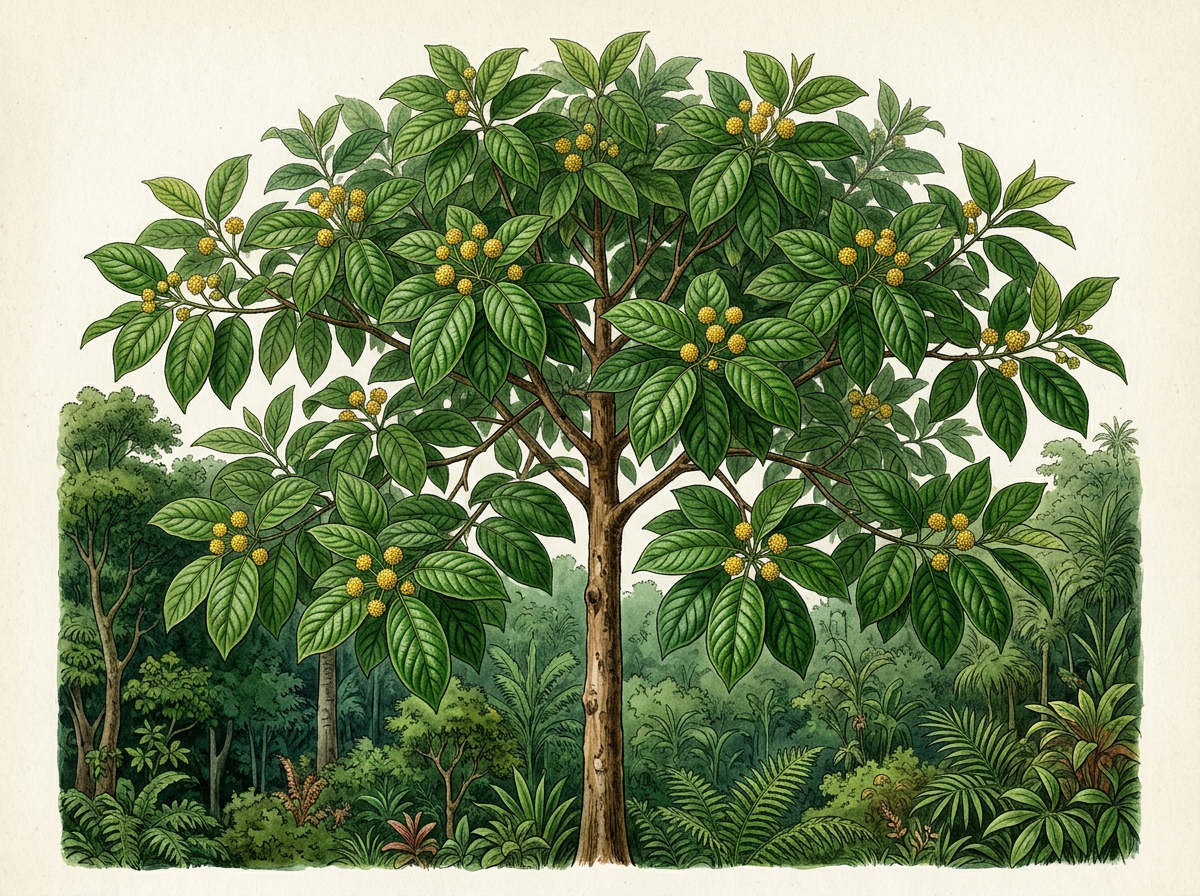
How long does it take to grow kratom (opens in a new tab) from scratch? Longer than most first-time growers expect. A rooted cutting generally needs two to three years of steady tropical conditions before the tree is large enough to lose a portion of its leaves without slowing down, and a tree grown from seed adds several months to a year on top of that. The good news is that kratom is vigorous once established, and each stage has clear milestones.
The timeline at a glance
The ranges below reflect common grower experience under good conditions: temperatures above 70°F (21°C), 60–80% humidity and bright, filtered light. Cooler or drier conditions stretch every stage.
- Germination (1–4 weeks): Fresh seeds sown on the surface of moist, fine mix under a humidity dome. Many seeds never sprout, so sowing generously is normal. See growing kratom from seed.
- Seedling stage (2–6 months): Tiny plants develop their first true leaves and slowly build roots. This is the most fragile window.
- Rooting a cutting (3–8 weeks): For growers starting from cuttings, roots typically form within one to two months in a humid propagation box. A 2025 study in Frontiers in Plant Science found rooting success varied widely by season in mist systems but was consistent in aeroponic systems. See cloning kratom from cuttings.
- Young tree (6–18 months): Growth accelerates. The plant moves up through pot sizes and starts branching, especially after the tip is pruned.
- Established tree (2–3 years): The canopy is full enough that a light, selective leaf harvest is possible without stalling growth.
- Mature tree (3+ years): In the ground in a tropical climate the tree keeps growing for many years; in containers, size is managed by pruning.
Why seeds take longer than cuttings
Seeds start from nothing: a seedling must build a root system and its first leaves using very limited stored energy. Kratom seeds are also notoriously short-lived after harvest, so germination rates are often low and uneven. A cutting, by contrast, starts as a piece of a mature tree. Once it roots, it already has a woody stem and full-size leaves, giving it a head start of several months.
What speeds kratom growth
- Consistent warmth. Growth slows markedly below about 65°F. A steady 75–85°F keeps the tree in active growth year-round.
- High humidity. Large leaves lose water quickly. Holding 60–80% humidity reduces stress, especially during rooting.
- The right light. A University of Florida trial found shaded greenhouse kratom grew taller and wider, with more leaf area, than plants in open field sun. Bright, filtered light is the goal. The guide on kratom light hours covers schedules.
- Adequate nutrition. Researchers at the University of Florida reported that higher fertilizer rates increased growth in container kratom. See how to fertilize kratom.
- Root room. A root-bound tree stalls. Repot when roots circle the container.
What slows it down
- Winter indoors with weak window light and dry, heated air.
- Soil that dries out completely between waterings.
- Cold drafts, cold floors or nights below 55°F.
- Pest infestations, particularly spider mites in dry indoor air.
- Repeated transplant shock from frequent moves or harsh pruning.
Indoor vs. outdoor growth rates
Outdoor trees in USDA zones 10–11 or in summer months elsewhere typically grow faster than indoor trees, thanks to stronger light and natural humidity. Many container growers in cooler regions use a hybrid approach: summers outside after gradual hardening off, winters indoors under a grow light. This captures summer's growth spurt without risking frost. The overwintering guide explains the transition.
A sample three-year plan from cutting
Year one
Root the cutting in late spring or early summer, when warmth helps root formation. Pot it into a 1-gallon container once roots are established, keep humidity high, and pot up to about 3 gallons by autumn. Expect a modest plant, often 1–2 feet tall by winter.
Year two
Resume regular feeding in spring, pinch the growing tip to encourage branching, and move into a 5–7 gallon container. With a summer outdoors, many trees reach 3–5 feet.
Year three
The tree now has a real canopy. If it is healthy and growing vigorously, a light harvest of mature lower leaves becomes reasonable. The guide on harvesting kratom leaves explains how much to take.
Setting realistic expectations
Growing kratom is a long project, and timelines vary with genetics, climate and care. A grower in Florida with an in-ground tree may see dramatic growth in two years, while a grower in Minnesota with an indoor tree may need longer for the same size. Tracking growth in a simple journal helps spot what works. The growth stages guide shows what each phase typically looks like.
Frequently Asked Questions
How long does it take a kratom seed to sprout?
Fresh seeds commonly sprout in about one to four weeks when surface-sown on moist, fine mix and kept warm and humid. Older seeds may take longer or fail entirely.
How long do kratom cuttings take to root?
Most growers see roots in roughly three to eight weeks in a warm, humid propagation box. Success rates vary with season, temperature and the condition of the parent tree.
Can I speed up kratom growth with more fertilizer?
Adequate feeding supports faster growth, but excess fertilizer can burn roots. Increase feeding only during warm, active growth and follow label rates.
Sources
- Aeroponics enables consistent cutting propagation of kratom (Mitragyna speciosa): impacts of photoperiod, cultivar, and rooting hormone (2025) (opens in a new tab) — Frontiers in Plant Science
- Plant growth and phytoactive alkaloid synthesis in kratom [Mitragyna speciosa (Korth.)] in response to varying radiance — Zhang et al., PLoS ONE 17(4): e0259326 (2022) (opens in a new tab) — PLoS ONE
- Effects of Nutrient Fertility on Growth and Alkaloidal Content in Mitragyna speciosa (Kratom) — Zhang et al., Frontiers in Plant Science 11:597696 (2020) (opens in a new tab) — Frontiers in Plant Science (University of Florida researchers)
- Extension Gardener Handbook, Chapter 13: Propagation (opens in a new tab) — NC State Extension
- Common grower experience (not a formal study) — Practices widely reported by hobby and nursery growers; treat as practical guidance rather than research findings
Written and reviewed by the Editorial Team. See editorial standards.
Related Guides
All guidesKratom Growth Stages in Pictures: From Seed to Mature Tree
Six visual stages: germination, seedling, rooted cutting, young tree, mature tree and leaf harvest.
Read guideHow to Clone Kratom From Cuttings: Step-by-Step Propagation Guide
Take a healthy stem cutting, trim the leaves, optionally dip in rooting hormone, and keep it warm and very humid with about 14 hours of light until it roots.
Read guideHow Does Kratom Grow? The Biology of Mitragyna speciosa
As a fast evergreen tree that adds opposite leaf pairs at its tips and flowers in round yellow heads.
Read guide