Getting Started
Kratom Growth Stages in Pictures: From Seed to Mature Tree
Editorial Team Last updated
This page contains affiliate links. If you buy through them, the site may earn a commission at no extra cost to you.
Quick Answer
Kratom passes through clear visual stages: a tiny germinating seed, a seedling with its first true leaves, a rooted cutting (for clones), a young tree with large glossy leaves, a mature tree that can grow very tall in the wild, and a leaf-harvest stage where mature leaves are picked by hand. The illustrations on this page show each stage, and the descriptions explain what healthy growth looks like.
Key Facts
| Stage 1 | Germination — tiny seeds, slow and uneven sprouting |
|---|---|
| Stage 2 | Seedling — first true leaves, very delicate |
| Stage 3 | Cutting — clone rooting under high humidity |
| Stage 4 | Young tree — large, glossy, oval leaves |
| Stage 5 | Mature tree — woody trunk, ball-shaped flower heads |
| Stage 6 | Leaf harvest — picking mature leaves while the tree keeps growing |
Kratom growth stages are easiest to understand visually, and many people look for grow kratom photos (opens in a new tab) to check whether their own plant looks healthy. This page walks through each stage of Mitragyna speciosa's life, from seed to mature tree. The stage images are labeled illustrations created to show typical features. A separate reference gallery includes credited photographs of a potted sapling and foliage from different plants, not a documented growth sequence; remaining photo spaces are reserved for documented grow photos. Each stage includes what to look for and a link to the detailed guide.
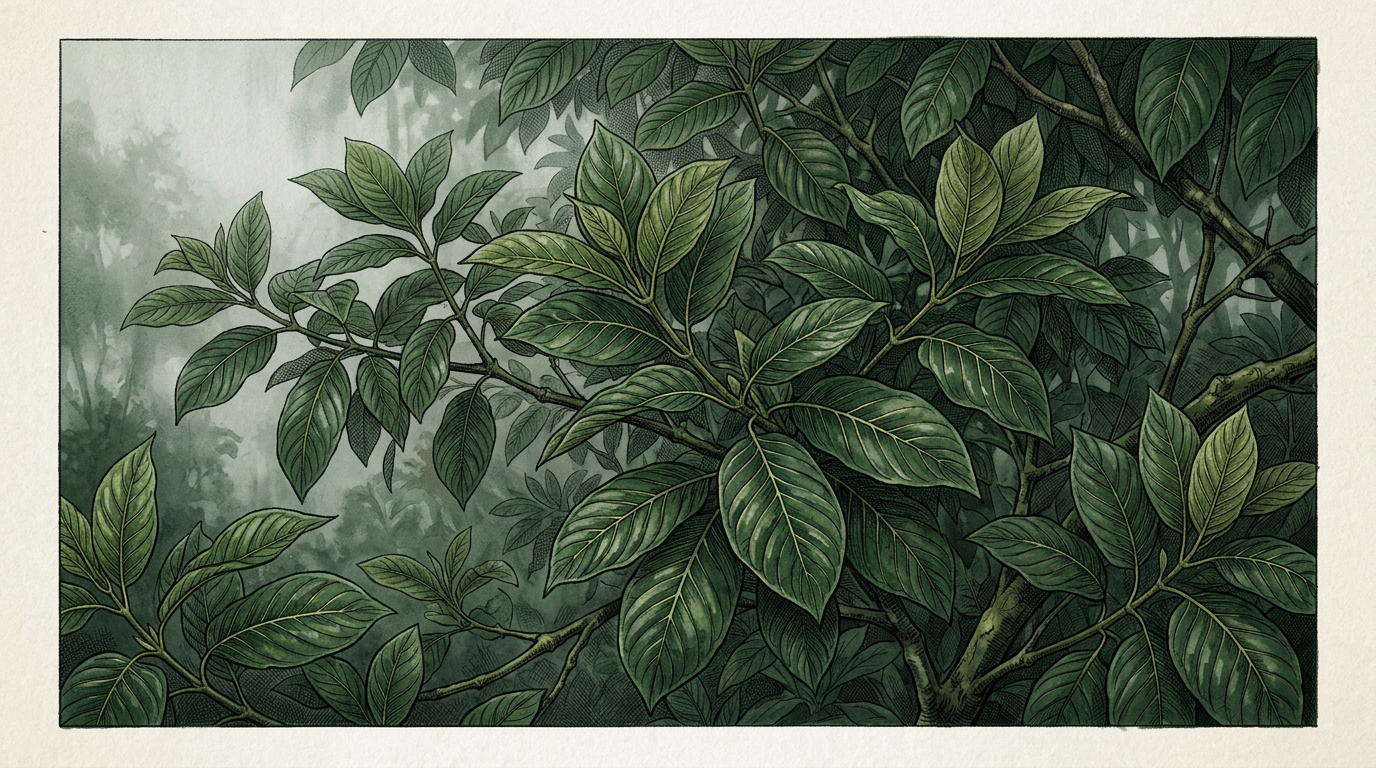
Stage 1: Germination
Kratom seeds are extremely small and lose viability quickly, so fresh seed matters. Germination is often slow and uneven. What to look for:
- A tiny white root (radicle) emerging, followed by a pair of small seed leaves (cotyledons)
- Sprouts that appear over several weeks rather than all at once
- A damp, never soggy, surface kept humid under a dome
Read how to grow kratom from seed for germination methods.
Stage 2: Seedling
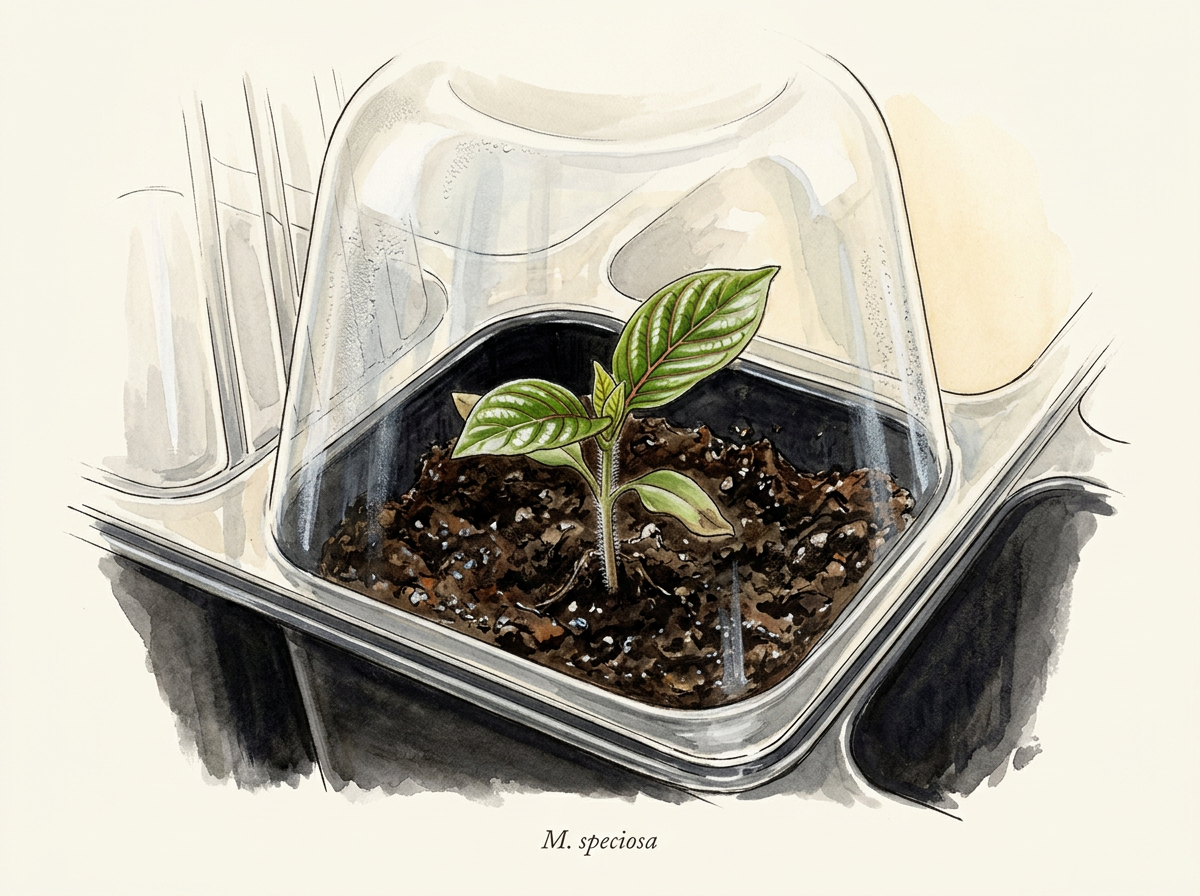
After the seed leaves, the first true leaves appear: small, oval and bright green with visible veins. Seedlings are fragile at this point and sensitive to drying out, cold drafts and damping-off, a fungal collapse at the soil line. Healthy seedlings look:
- Upright and compact, not stretched or leaning hard toward the light
- Evenly green, without yellowing from the bottom up
- Steadily adding new pairs of leaves
Stage 3: Rooted cutting
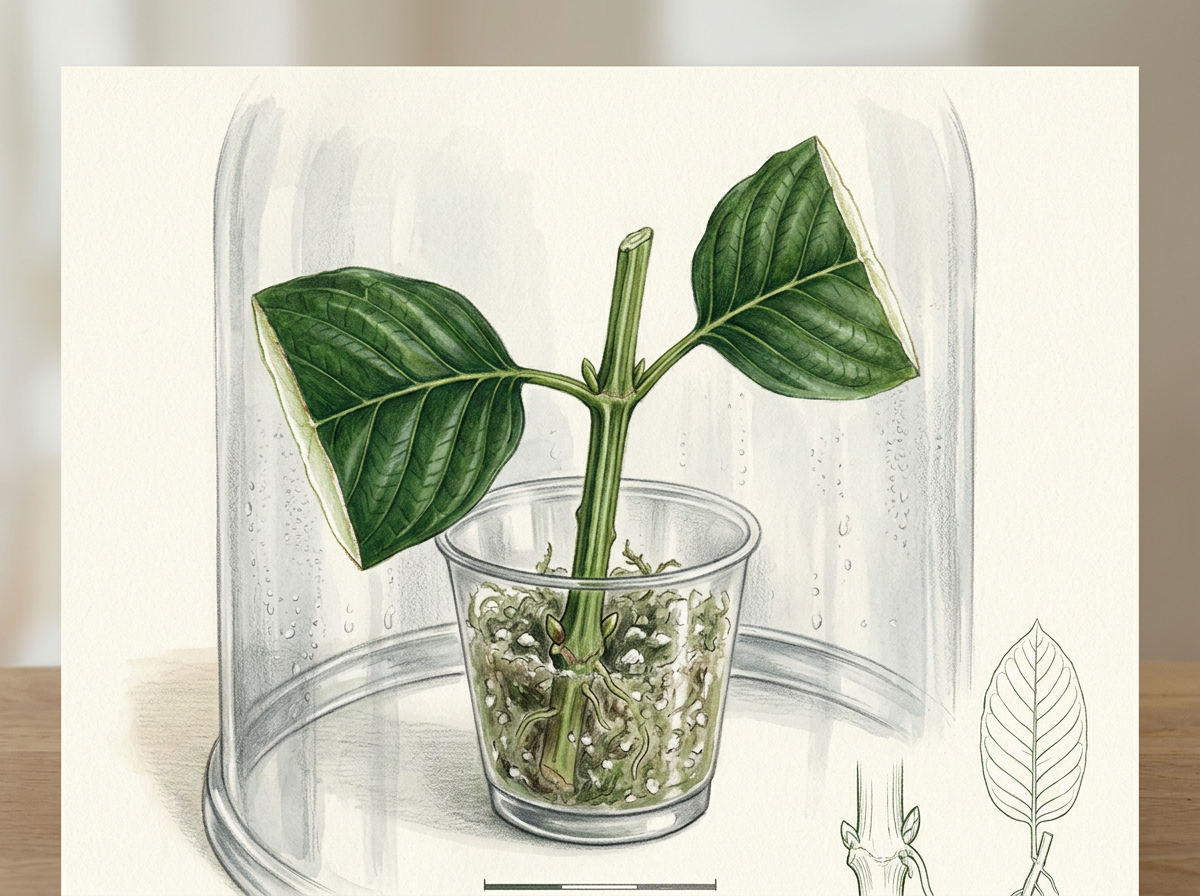
Many growers skip seeds and start from cuttings, which copy the parent plant. A cutting starts as a short stem with a few leaves (often trimmed in half to reduce water loss) placed in a humid environment. Signs of success include new leaf growth at the tip and roots visible through a clear container or emerging from drainage holes. A 2025 study found a 14-hour light period helped kratom cuttings root better than 10 hours. See how to clone kratom from cuttings.
Stage 4: Young tree
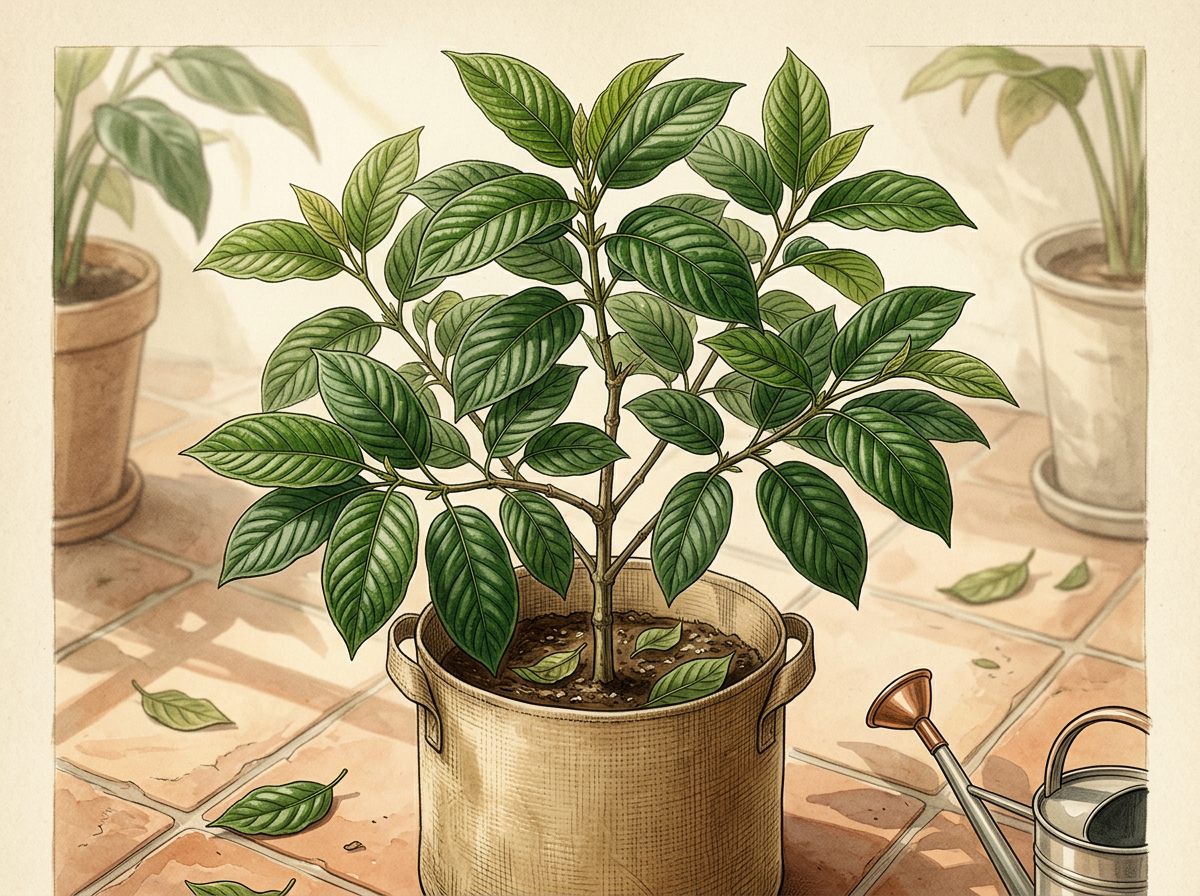
Once established, kratom grows steadily in warm, humid conditions. Young trees develop large, glossy, oval leaves arranged in opposite pairs along the stem, and the stem begins to firm up and turn woody at the base. Healthy young trees show:
- Large, deep green leaves with a slight sheen
- Short spaces between leaf pairs, a sign of good light
- Steady new growth at the top during warm months
Stage 5: Mature tree
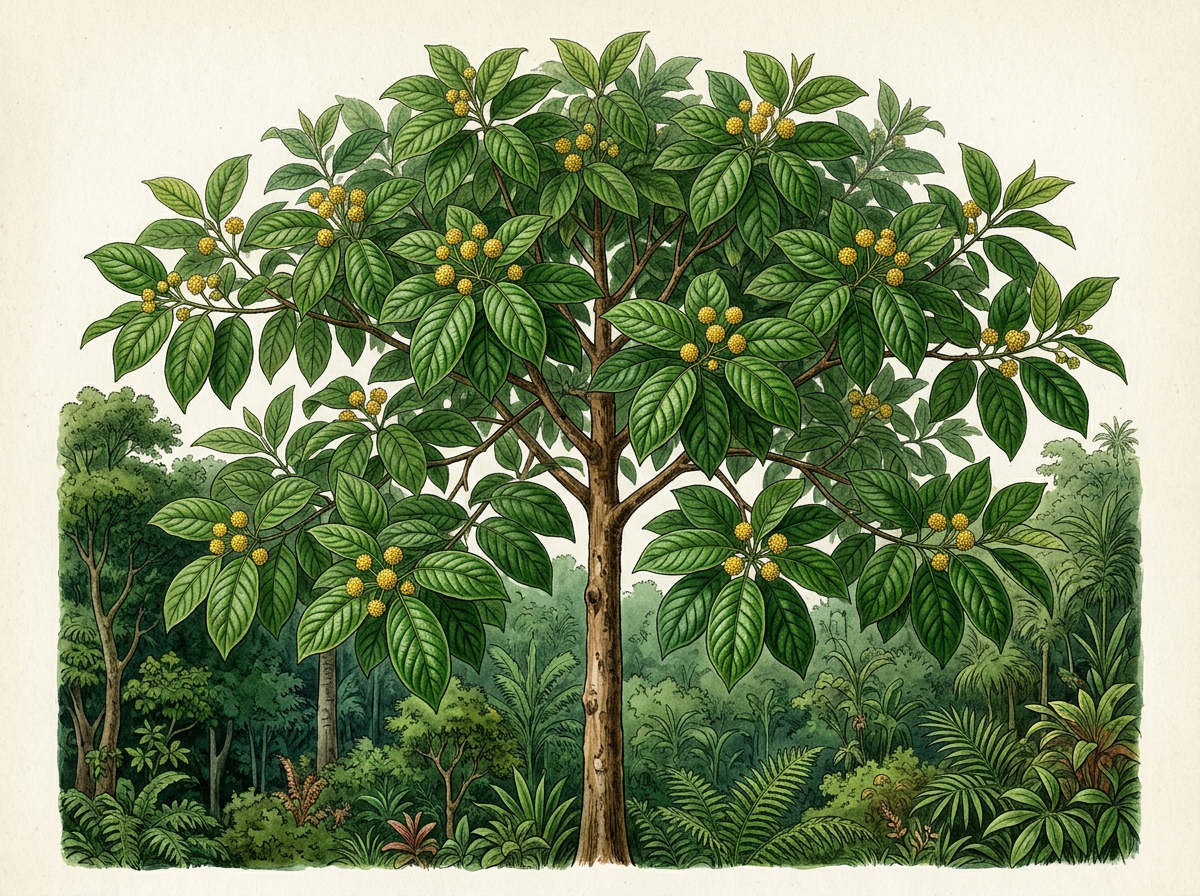
In its native habitat, kratom can become a large tree with a straight trunk, and botanical sources describe wild trees well over 10 meters tall. In containers, pruning keeps it much smaller. Mature trees may produce round, ball-shaped clusters of small yellowish flowers. The tree size guide covers expected heights indoors and outdoors.
Indoor setups
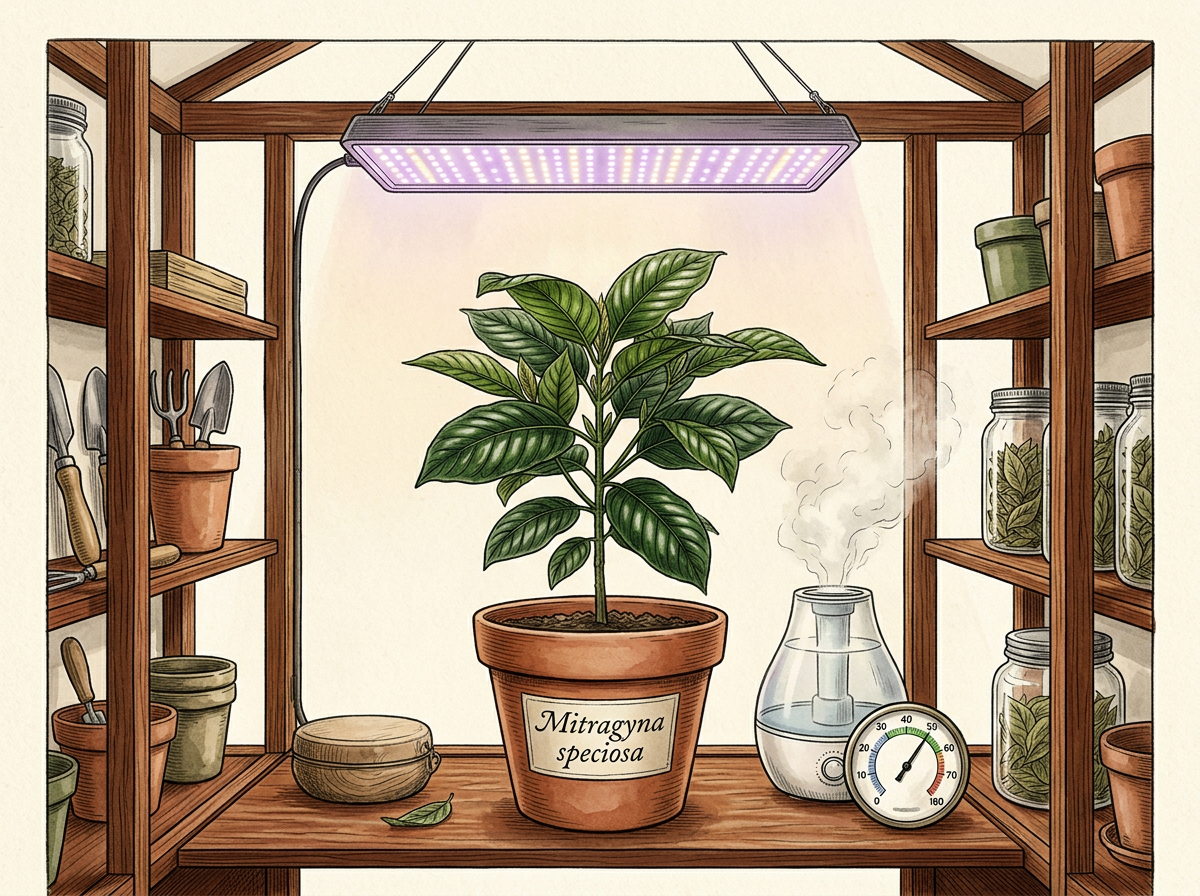
Most growers outside the tropics keep kratom indoors at least part of the year. A typical setup includes a pot with drainage, an LED grow light on a timer, and a humidifier or humidity tray. The indoor guide explains each component.
Stage 6: Leaf harvest
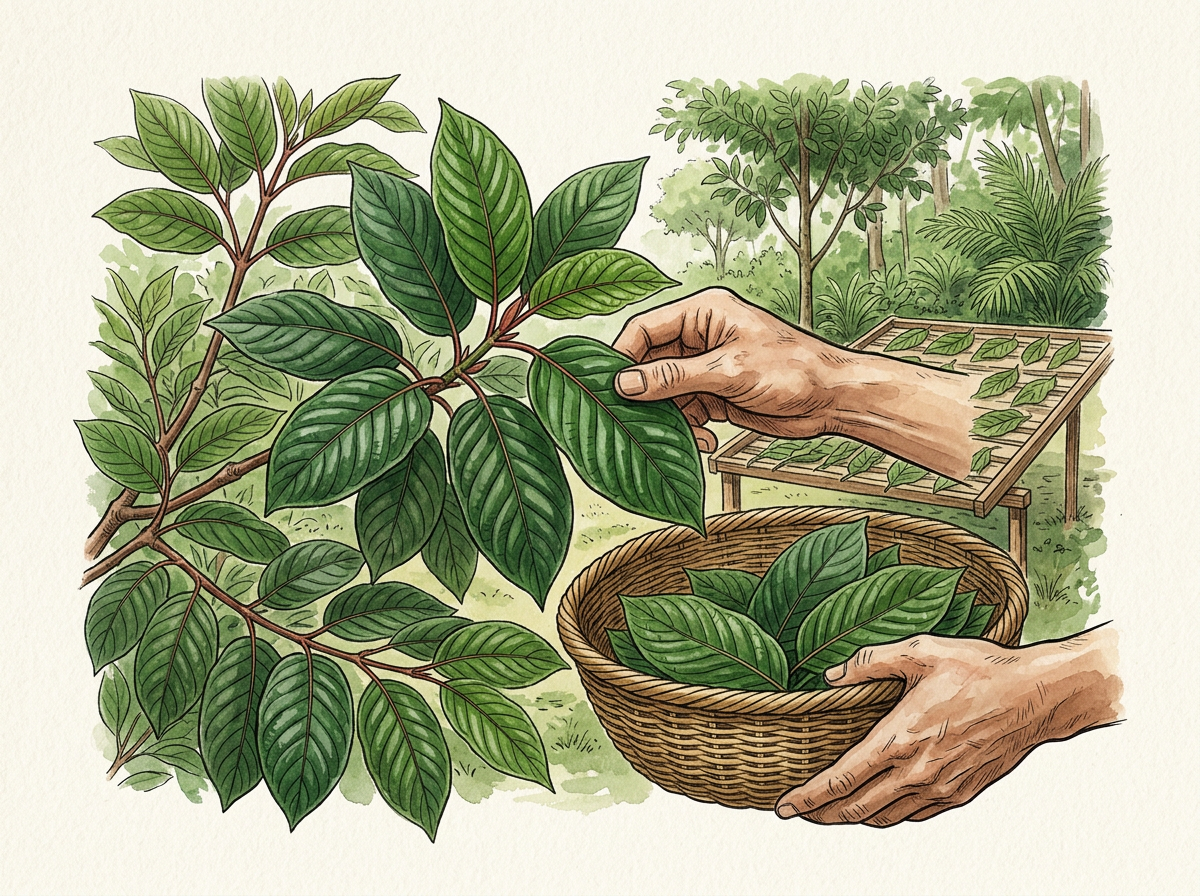
On an established tree, mature leaves can be picked by hand while the tree keeps growing. Growers generally wait until a plant is large and vigorous before removing leaves, and never strip more than a modest portion at once. The harvesting guide explains timing and technique from a gardening perspective.
Keep a visual grow journal
Taking photos of the same plant from the same angle every week or two is one of the best ways to spot slow changes, from yellowing leaves to a burst of new growth. A simple notebook or plant growth journal (opens in a new tab) helps track dates, watering, feeding and light changes alongside the photos.
- Photograph the whole plant and a close-up of new growth.
- Note temperature, humidity and any changes to care.
- Compare photos monthly to see growth trends.
Troubleshooting by appearance
- Yellowing lower leaves: often overwatering or low nitrogen; see how to fertilize kratom
- Brown, crispy edges: low humidity or underwatering
- Fine webbing or speckling: possible spider mites; see kratom pests and diseases
- Leggy stems: too little light; see how many hours of light kratom needs
How long each stage lasts
Stage lengths vary widely with warmth, light and care. Germination can take weeks, a seedling may need months to reach a sturdy size, and a cutting typically needs several weeks to root. A young tree in good conditions can grow quickly during warm months but slows in cool, dim winters. For a realistic overall timeline, read how long it takes to grow kratom.
Real kratom reference photos
These credited photographs show different plants, not a before-and-after sequence or an Editorial Team grow diary. Their exact ages and growing conditions are not documented here.
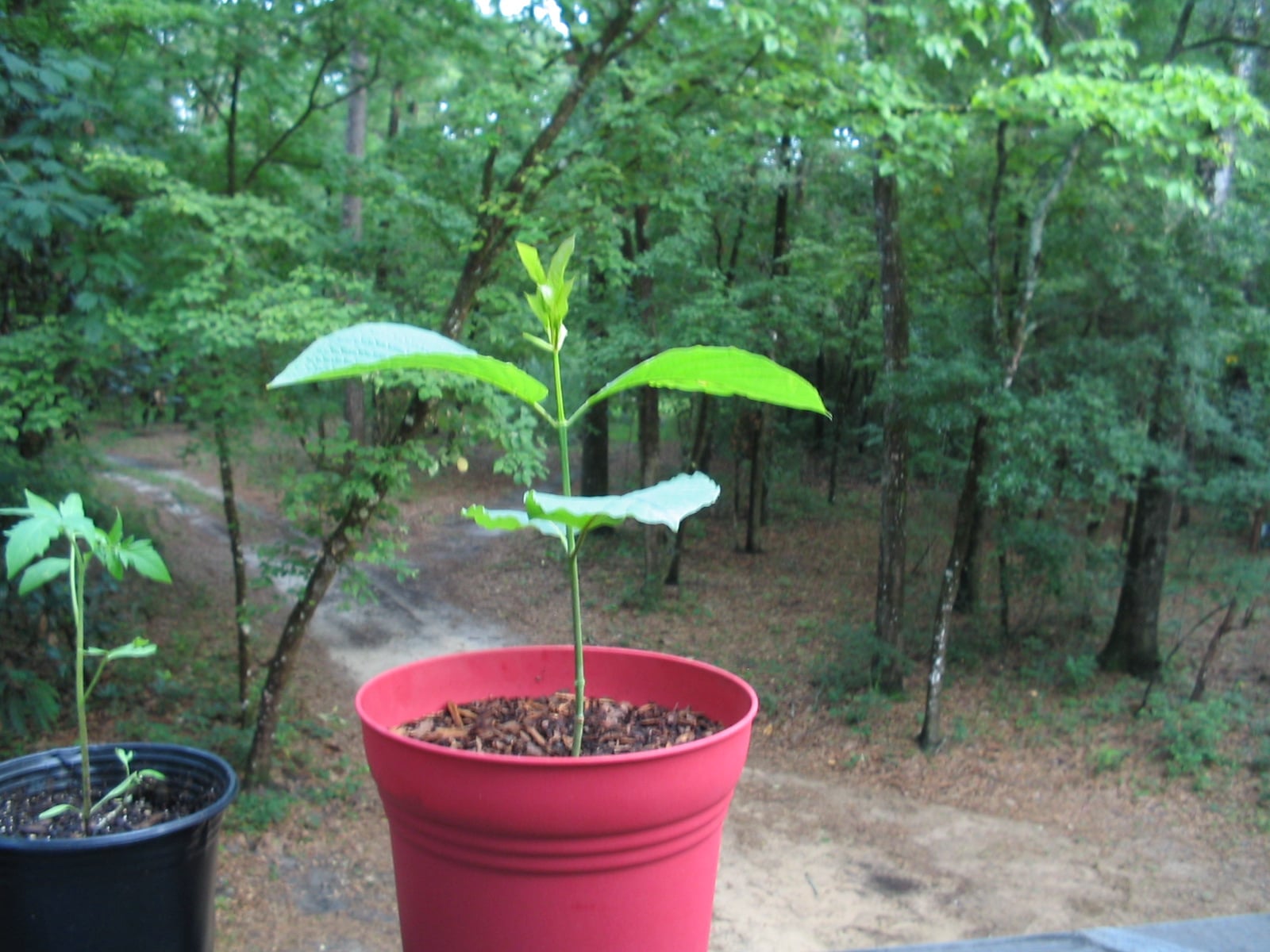
Young potted plant: the kratom sapling is in the red pot; the plant at the left is not identified.
Photo: Uomo vitruviano / Wikimedia Commons (opens in a new tab). CC BY-SA 3.0 (opens in a new tab). Resized for display; not cropped.
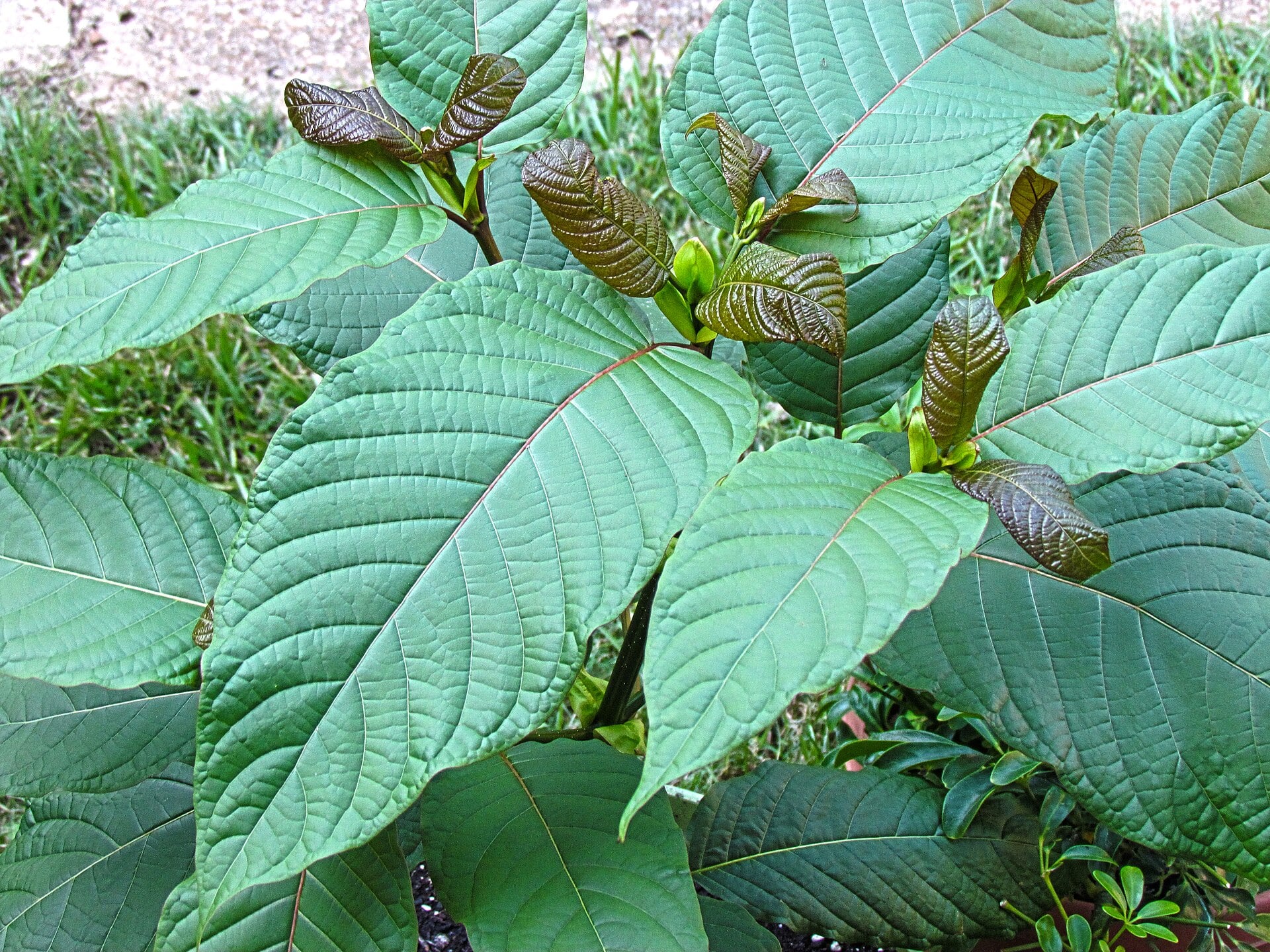
Foliage detail: established leaves and reddish new shoots. Leaf size does not establish the age of this plant.
Photo: ThorPorre / Wikimedia Commons (opens in a new tab). CC BY 3.0 (opens in a new tab). Resized for display; not cropped.
Frequently Asked Questions
Are the images on this page real photos?
No. The images are labeled illustrations created to show typical features of each stage. Marked spaces are reserved for real, documented grow photos.
What does a kratom seedling look like?
A small plant with two seed leaves followed by pairs of small, oval, bright green true leaves with visible veins.
What do mature kratom leaves look like?
Large, glossy, oval leaves arranged in opposite pairs, with a prominent central vein. On mature trees, round flower heads may also appear.
Sources
- Mitragyna speciosa Korth. — Plants of the World Online (opens in a new tab) — Royal Botanic Gardens, Kew
- Mitragyna speciosa — GRIN-Global Taxonomy (Nomen 417532) (opens in a new tab) — USDA Agricultural Research Service, Germplasm Resources Information Network
- Aeroponics enables consistent cutting propagation of kratom (Mitragyna speciosa): impacts of photoperiod, cultivar, and rooting hormone (2025) (opens in a new tab) — Frontiers in Plant Science
- A botanical, phytochemical and ethnomedicinal review of the genus Mitragyna Korth: Implications for products sold as kratom — Brown, Lund & Murch (2017) (opens in a new tab) — Journal of Ethnopharmacology 202:302–325 (PubMed record)
- Common grower experience (not a formal study) — Practices widely reported by hobby and nursery growers; treat as practical guidance rather than research findings
Written and reviewed by the Editorial Team. See editorial standards.
Related Guides
All guidesHow Long Does It Take to Grow Kratom? A Realistic Timeline
About 2–3 years from a rooted cutting to a tree that can spare leaves; 3+ years from seed.
Read guideHow to Grow Kratom From Seed: Germination Step by Step
Use very fresh seed, surface-sow it on fine moist mix, and keep it warm, humid and lit under a dome.
Read guideHow Does Kratom Grow? The Biology of Mitragyna speciosa
As a fast evergreen tree that adds opposite leaf pairs at its tips and flowers in round yellow heads.
Read guide