Climate & Location
Overwintering Kratom: Keeping a Tropical Tree Alive Through Cold Months
Editorial Team Last updated
This page contains affiliate links. If you buy through them, the site may earn a commission at no extra cost to you.
Quick Answer
Kratom is frost-tender and grows poorly in cold. Overwintering means moving container trees indoors before night temperatures drop to around 50°F (10°C), then keeping them at roughly 65–85°F (18–29°C) with good humidity and 12–14 hours of light. Expect slower growth and some leaf drop; water less, feed lightly or not at all, and watch closely for pests. Frost can kill or severely damage kratom.
Key Facts
| Move indoors | Before nights drop to ~50°F (10°C) |
|---|---|
| Winter temperature | Aim for 65–85°F (18–29°C); avoid below ~55°F |
| Frost | Can kill or severely damage kratom |
| Light | 12–14 hours, usually with a grow light |
| Humidity | 50%+; indoor winter air is often far drier |
| Water and feed | Less water; little or no fertilizer |
Overwintering kratom (opens in a new tab) is essential for nearly every grower outside the tropics. Mitragyna speciosa evolved in frost-free Southeast Asian lowlands and has no adaptation for cold. Across almost all of the United States, any kratom tree that spends summer outdoors must come inside for winter, and even indoor trees need extra care when days are short and heating dries the air. This guide explains when to move plants, how to set up a winter spot, and how to bring them back outside in spring.
How cold is too cold for kratom?
Kratom grows best around 75–90°F (24–32°C). Growth slows noticeably below about 60°F (16°C), and extended periods in the 40s °F (around 5–9°C) cause stress and leaf drop. Frost damages leaves and young stems and can kill a plant. Only the warmest parts of the US, roughly USDA zones 10b–11, avoid these conditions reliably; see kratom grow zones.
When to bring kratom indoors
Watch nighttime lows rather than daytime highs. A practical rule is to move plants inside when nights begin dropping toward 50°F (10°C), well before any frost risk. Moving early, while the windows are still open and the house is not yet heated, also makes the transition gentler.
Preparing a plant for the move
- Inspect for pests. Check leaf undersides, stems and the soil surface. Rinse foliage with water and treat any pests outdoors; see kratom pests and diseases.
- Clean the pot. Wipe the container and check that drainage holes are clear.
- Prune if needed. Light pruning makes a large tree easier to fit indoors; avoid heavy pruning right before winter. See repotting and pruning kratom.
- Acclimate gradually. If possible, move the plant to a shadier outdoor spot for a week so the drop in light indoors is less of a shock.
Setting up a winter spot
Temperature
Choose the warmest stable room available and keep the plant away from cold windows at night, exterior doors, and heating vents that blow hot, dry air. A thermometer with min/max memory reveals cold overnight dips near glass. Some growers use a small grow tent with a plant-safe heater to keep a steady microclimate; when comparing options, an indoor plant heater or grow tent (opens in a new tab) setup should have thermostatic control and safety shut-off features, and be used according to the manufacturer's directions.
Light
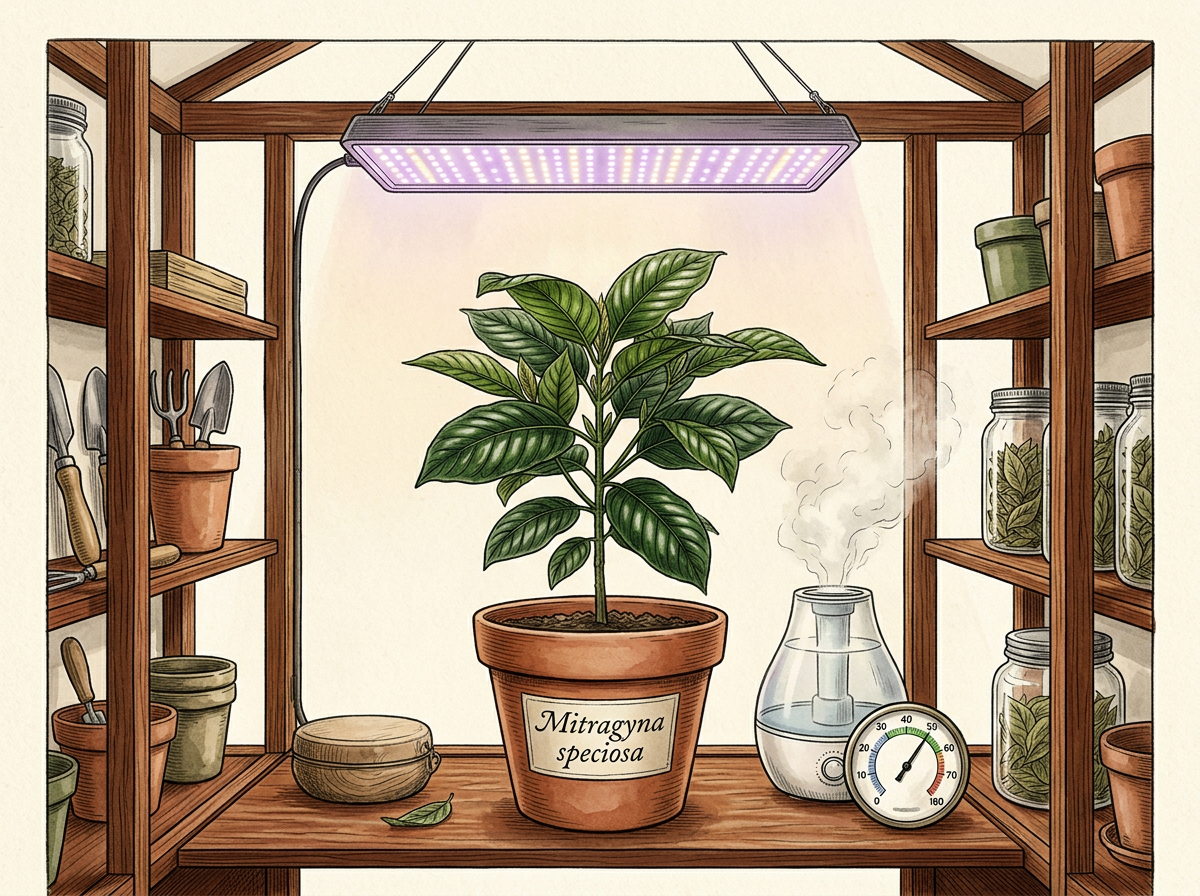
Winter window light is weak and short. Most overwintered kratom needs a full-spectrum LED grow light on a timer for 12–14 hours a day to stay healthy. See how many hours of light kratom needs.
Humidity
Heated indoor air often falls to 30% humidity or lower. Use a humidifier, humidity tray, or a grow tent to keep humidity at 50% or higher. Dry air also favors spider mites. See watering and humidity for kratom.
Winter watering and feeding
With lower light and cooler temperatures, kratom uses less water. Check soil before watering and let the top inch dry slightly more than in summer. Overwatering in winter is a leading cause of root rot. Reduce fertilizer to monthly at quarter to half strength, or pause it entirely if growth has stopped; see how to fertilize kratom.
What to expect in winter
- Some leaf drop right after the move is common as the plant adjusts to lower light.
- Slower growth is normal; the plant is conserving energy.
- Smaller new leaves may appear under lower light.
- Pest flare-ups, particularly spider mites, are more likely in warm, dry indoor air.
Rescuing a cold-damaged plant
If a kratom tree has been exposed to cold, move it somewhere warm, avoid fertilizing, and water sparingly. Do not prune damaged growth immediately; wait until new growth shows which stems are still alive, then trim back to healthy tissue. Plants with live, green stems under the bark often recover.
Moving plants back outside in spring
- Wait until night temperatures stay reliably above 55–60°F (13–16°C).
- Start in full shade for several days, then gradually introduce morning sun over one to two weeks.
- Watch for leaf scorch, which signals too much sun too quickly.
- Resume regular watering and feeding as growth picks up.
Growing kratom indoors year-round
Many growers find it simpler to keep kratom indoors permanently, avoiding the twice-yearly transition. Read how to grow kratom indoors for a full year-round setup, and what climate kratom grows in for the conditions to aim for.
Frequently Asked Questions
What is the lowest temperature kratom can tolerate?
Kratom is frost-tender. Growth slows below about 60°F (16°C), extended time in the 40s °F causes stress, and frost can kill the plant.
When should I bring my kratom tree inside?
Before night temperatures drop toward 50°F (10°C). Watch nighttime lows rather than daytime highs.
Why is my kratom dropping leaves in winter?
Lower light, cooler temperatures, dry indoor air and the stress of moving indoors commonly cause leaf drop. Add a grow light, raise humidity and keep it warm.
Sources
- USDA Plant Hardiness Zone Map (opens in a new tab) — USDA Agricultural Research Service
- Lighting for indoor plants (opens in a new tab) — University of Minnesota Extension
- UC IPM Pest Notes (Spider Mites 7405, Aphids 7404, Scales 7408) (opens in a new tab) — University of California Statewide Integrated Pest Management Program
- Extension Gardener Handbook (opens in a new tab) — NC State Extension
- Common grower experience (not a formal study) — Practices widely reported by hobby and nursery growers; treat as practical guidance rather than research findings
Written and reviewed by the Editorial Team. See editorial standards.
Related Guides
All guidesKratom Grow Zone: Where Can You Grow Kratom Outdoors?
USDA zones 10–11 year-round; zone 9 with frost protection; containers everywhere else.
Read guideHow to Grow Kratom Indoors: Light, Humidity and Space Setup
Yes — with a full-spectrum LED, a humidifier, steady 70–85°F warmth and gentle airflow.
Read guideWhat Climate Does Kratom Grow In? Temperature, Rain and Humidity
A hot, humid, rainy tropical climate with no frost and little seasonal temperature change.
Read guide