Legal & Origins
Where Do They Grow Kratom? Farming Regions and How Cultivation Works
Editorial Team Last updated
This page contains affiliate links. If you buy through them, the site may earn a commission at no extra cost to you.
Quick Answer
Most commercially traded kratom is grown on small family farms and riverbank plots in Indonesia, particularly the province of West Kalimantan on the island of Borneo (districts such as Kapuas Hulu, Melawi, Ketapang and Sekadau). Thailand, where cultivation became legal in 2021, also grows kratom, and the tree is cultivated on a smaller scale across its native range. Outside Asia, kratom is grown only by hobbyists and a few nurseries in warm climates or greenhouses.
Key Facts
| Main producing country | Indonesia |
|---|---|
| Key province | West Kalimantan (Borneo) |
| Notable districts | Kapuas Hulu, Melawi, Ketapang, Sekadau |
| Typical farm type | Smallholder plots, riverbanks, mixed gardens |
| Other growing countries | Thailand, Malaysia, Philippines, others in the native range |
| Outside Asia | Hobby and nursery growing only (greenhouses, Hawaii, South Florida) |
Where do they grow kratom (opens in a new tab) for the products sold around the world? The short answer is Southeast Asia, and above all Indonesia. Kratom (Mitragyna speciosa) is a tropical evergreen tree, and commercial supply comes from farms inside or near its native range, where heat, rainfall and humidity let the trees grow quickly year-round. This guide looks at the main farming regions, what a typical kratom farm looks like, and what the commercial picture means for anyone growing a tree at home.
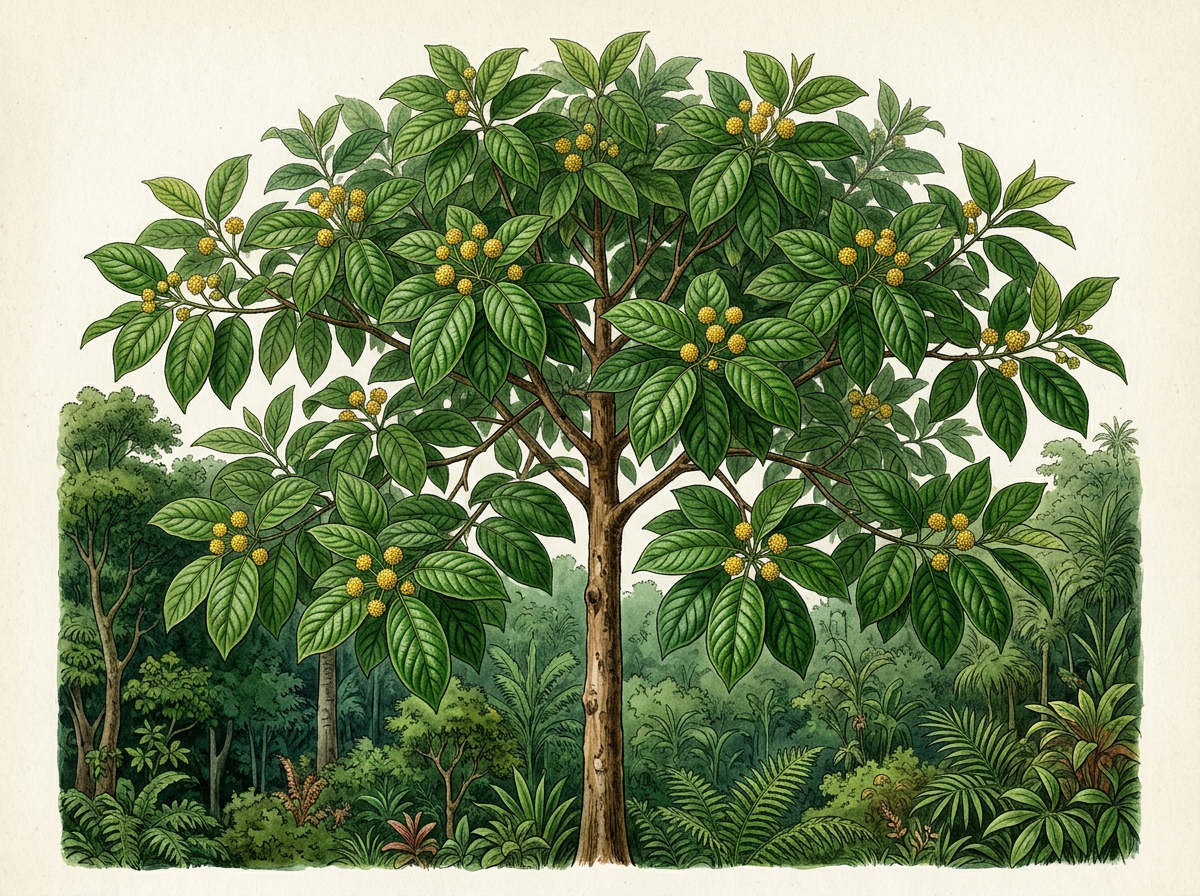
Indonesia: the center of kratom farming
Indonesia supplies the majority of the kratom traded internationally. Production is concentrated on Borneo, in the province of West Kalimantan (Kalimantan Barat), where districts such as Kapuas Hulu, Melawi, Ketapang and Sekadau are known for kratom. The Kapuas River and its tributaries provide exactly the alluvial, moisture-rich ground the tree favors in the wild.
Research on kratom production areas in Kapuas Hulu has documented trees growing on both mineral soils and peat soils, reflecting how the crop has spread across different types of farmland. Sumatra, another part of the native range, also has kratom-growing communities, though on a smaller scale than West Kalimantan.
Why West Kalimantan?
- Native habitat: Borneo is part of kratom's natural range, and the species was first described from Bornean specimens in 1839.
- Riverbank land: Floodplains along the Kapuas River system offer fertile, constantly moist soil.
- Climate: Hot, humid, frost-free weather with heavy rainfall supports year-round leaf growth.
- Livelihoods: Kratom became an important cash crop for many rural households, sometimes alongside rubber and other crops.
What a typical kratom farm looks like
Kratom farming is usually small-scale. Rather than vast monoculture plantations, much of the supply comes from family plots, riverbank strips and mixed gardens where kratom grows alongside other crops. Trees are often managed by regular leaf picking and pruning, which keeps them bushier and within reach instead of letting them grow into tall forest trees.
Common features of these farms include:
- Trees planted on moist, low-lying ground close to water
- Propagation from seed, wild seedlings or cuttings
- Hand-picking of mature leaves, with the tree left standing to regrow
- Drying of leaves on racks, mats or in drying rooms before further processing
- Sale through local collectors and exporters rather than direct to overseas buyers
For a closer look at how a tree develops from seedling to mature leaf producer, see how kratom grows and how long it takes to grow kratom.
Thailand
Kratom has a long history in southern Thailand, where it grows wild and in village gardens. For decades the plant was controlled under Thai narcotics law, but Thailand removed kratom from its Category 5 narcotics list in an amendment that took effect on August 24, 2021. Since then, growing kratom trees has been legal there and cultivation has expanded, though Thai rules on sale and use still apply. A 2022 study in Frontiers in Plant Science sampled naturally growing kratom populations across four regions of Thailand, illustrating how widespread the tree is in the country.
Malaysia, the Philippines and elsewhere
Kratom grows naturally in Peninsular Malaysia and is common in parts of the north, but Malaysia restricts kratom by law, so it is not an open export crop there. In the Philippines, where the tree is called mambog, it grows in low-altitude forests in places such as Cagayan, Mindoro and Mindanao; the Philippines guide covers that in detail. Kratom is also cultivated in Vietnam and occurs naturally in Cambodia and New Guinea.
The countries guide compares these countries side by side, including how their laws affect cultivation and trade.
Is kratom grown in the United States?
There is no commercial kratom farming industry in the United States. The climate across almost all of the country is too cold for a frost-tender tropical tree to thrive outdoors. Where kratom is grown, it is by hobbyists and a small number of nurseries:
- Greenhouses and indoor setups anywhere in the country
- Outdoor trees in Hawaii and the warmest parts of South Florida (roughly USDA zones 10b–11)
- Container plants that summer outdoors and overwinter inside
Laws also matter. Kratom is not federally controlled, but several states ban it. Before buying a plant, read whether it is legal to grow kratom in the US.
Wild-harvested vs. farmed kratom
Not all kratom comes from planted trees. Some leaf is gathered from wild or semi-wild trees along rivers and forest edges. Over time, however, more of the supply has shifted toward deliberately planted trees, which are easier to manage, pick and keep track of. Kew's Plants of the World Online lists the species as Least Concern, partly because it regenerates readily and is widely cultivated.
Why origin information matters
Because commercial kratom is collected from many small farms and passes through collectors and exporters, two products from the same region can differ. That is one reason many buyers look for vendors who publish third-party lab testing and are open about sourcing. For readers who want to see what that looks like in practice, Super Speciosa (opens in a new tab) is one vendor that publishes lab reports for its products.
What commercial farming teaches home growers
Farmers in West Kalimantan succeed with kratom because they plant it where it wants to be: warm, wet, fertile ground with plenty of light. Home growers outside the tropics cannot match a Bornean riverbank, but they can imitate the key elements:
- Keep temperatures warm — ideally 75–90°F (24–32°C) and never near freezing.
- Hold humidity high, around 60–80% for young plants.
- Use rich, well-draining, slightly acidic soil that stays evenly moist.
- Provide strong light: bright indirect sun outdoors or quality grow lights indoors.
- Prune and pick lightly to keep the tree a manageable size.
The complete grow guide turns these principles into a step-by-step plan, from sourcing a plant to long-term care.
Frequently Asked Questions
Which country grows the most kratom?
Indonesia supplies most of the kratom traded internationally, with much of it grown in the province of West Kalimantan on Borneo.
Are there kratom farms in the United States?
There is no commercial kratom farming industry in the US. Kratom is grown by hobbyists and a few nurseries in greenhouses, indoors, or outdoors in Hawaii and South Florida, subject to state laws.
Is kratom farmed or harvested from the wild?
Both. Some leaf comes from wild or semi-wild trees, but much of today's supply comes from planted trees on smallholder farms and riverbank plots.
Sources
- Mitragyna speciosa Korth. — Plants of the World Online (opens in a new tab) — Royal Botanic Gardens, Kew
- Soil properties and heavy-metal levels in kratom production areas of Kapuas Hulu, West Kalimantan (opens in a new tab) — Indian Journal of Agricultural Research (ARCC Journals)
- Thailand Decriminalizes Kratom in Amended Narcotics Act (opens in a new tab) — Tilleke & Gibbins
- Variations in mitragynine content in the naturally growing Kratom (Mitragyna speciosa) population of Thailand — Leksungnoen et al. (2022) (opens in a new tab) — Frontiers in Plant Science 13:1028547
- Mambog — Mitragyna speciosa (Philippine Medicinal Plants) (opens in a new tab) — StuartXchange (Godofredo U. Stuart Jr., M.D.)
- USDA Plant Hardiness Zone Map (opens in a new tab) — USDA Agricultural Research Service
Written and reviewed by the Editorial Team. See editorial standards.
Related Guides
All guidesWhat Countries Grow Kratom? A Country-by-Country Guide
Indonesia, Thailand, Malaysia, the Philippines, Cambodia, Vietnam and Papua New Guinea, with Indonesia producing most exports.
Read guideWhere Does Kratom Grow Naturally? Native Range and Wild Habitat
In wet tropical forests from Thailand and Cambodia through Malaysia, Indonesia and the Philippines to New Guinea.
Read guideIs It Legal to Grow Kratom in the US? Federal and State Rules (2026)
In most states, yes; kratom is not federally controlled, but Alabama, Arkansas, Indiana, Tennessee, Vermont and Wisconsin ban it.
Read guide