Legal & Origins
Where Does Kratom Grow in the Philippines? Mambog's Range and Habitat
Editorial Team Last updated
This page contains affiliate links. If you buy through them, the site may earn a commission at no extra cost to you.
Quick Answer
In the Philippines, kratom is called mambog and grows naturally in low-altitude forests. Records place it in Cagayan Province on northern Luzon, on the island of Mindoro, and on Mindanao. The Philippines lies within the species' native range, but it is a minor source of kratom compared with Indonesia.
Key Facts
| Local name | Mambog |
|---|---|
| Scientific name | Mitragyna speciosa (Korth.) Havil. |
| Habitat | Low-altitude forests, often near water |
| Recorded locations | Cagayan (Luzon), Mindoro, Mindanao |
| Native status | Native — part of the Malesian range |
| Commercial role | Minor; Indonesia dominates exports |
Where does kratom grow in the Philippines (opens in a new tab)? The short answer is in low-altitude forests on several major islands. Kratom (Mitragyna speciosa), known in the Philippines as mambog, is native to the archipelago, and the Philippine medicinal plant database StuartXchange records it in Cagayan Province on Luzon, on Mindoro, and on Mindanao. This guide covers the tree's Philippine range, its habitat, how the country fits into the wider kratom picture, and what the Philippine climate teaches home growers.
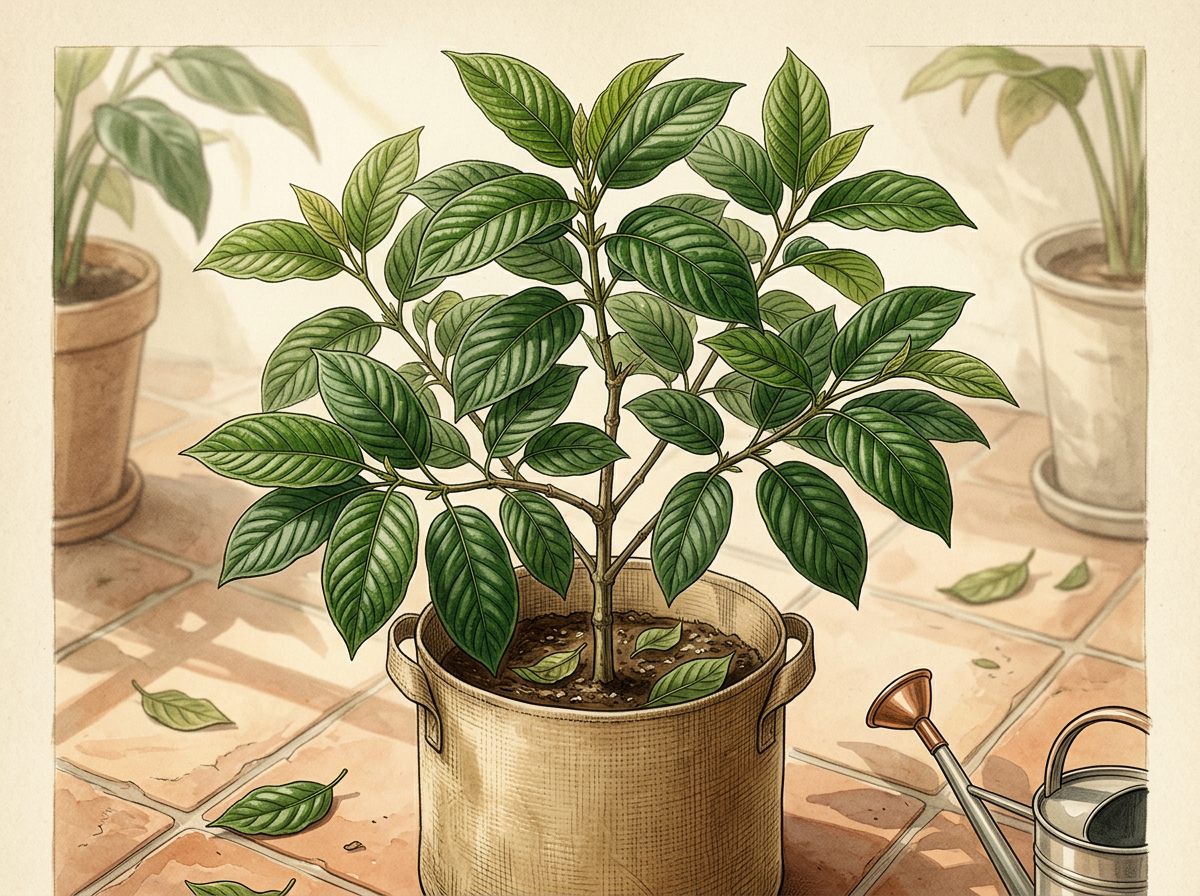
Mambog: kratom's Philippine name
Filipino botanical references list kratom as mambog. The tree is the same species that grows in Thailand, Malaysia and Indonesia — a tall tropical evergreen in the coffee family (Rubiaceae) with large, glossy, oval leaves and round, ball-shaped flower heads. Kew's Plants of the World Online includes the Philippines in the species' native range, placing the archipelago in the Malesian heart of kratom's distribution.
Where mambog grows in the Philippines
- Cagayan Province (northern Luzon): The Cagayan Valley, drained by the country's longest river, offers warm lowland forest and river margins.
- Mindoro: This large island south of Luzon has lowland forest within the tree's preferred elevation band.
- Mindanao: The southern island's humid lowlands sit closest to Borneo and Indonesia, where kratom is most abundant.
These records reflect where botanists have documented the tree; mambog may also occur in other low-altitude forests that have been less thoroughly surveyed. As with kratom elsewhere, it is a lowland species, so it is not expected in cool upland forests.
Habitat: what Philippine kratom forests look like
Kratom across Southeast Asia favors similar places: humid lowland forest, riverbanks and floodplains, forest edges and secondary growth, and ground that stays moist much of the year. The Philippine records of mambog in low-altitude forest match that pattern. The tree tolerates periodically wet soil better than many trees, which is why it is so often found near streams and rivers.
How the Philippines compares with other kratom countries
The Philippines is part of kratom's natural home, but it is not a major producer. Most kratom traded internationally comes from Indonesia, especially West Kalimantan on Borneo. Thailand has expanded cultivation since legalizing it in 2021, and Malaysia has abundant wild trees but restricts the plant. The countries guide compares all of them, and the guide to where they grow kratom explains commercial farming.
Legal status in the Philippines
StuartXchange notes that mambog is not listed as a dangerous drug by the Philippine Dangerous Drugs Board. Rules can change, however, and import, export and sale may be governed by separate regulations. Nothing here is legal advice; anyone with a specific question should check with the relevant Philippine authorities.
Philippine origin labels
Because the Philippines is a minor producer, products labeled with Philippine origin are uncommon. Origin names on any kratom label are difficult for a buyer to verify, and lab testing is generally a more reliable indicator of what a product contains than a place name. For readers who want to understand those documents, Sacred Plant Life explains how to read a kratom COA lab report (opens in a new tab).
The Philippine climate and what it means for growers
The Philippine lowlands have the kind of climate kratom loves: warm all year, humid, with heavy seasonal rainfall and no frost. Typical lowland conditions include:
- Temperature: Warm year-round, generally in the high 70s to low 90s °F (mid-20s to low 30s °C)
- Humidity: Consistently high, often above 70%
- Rainfall: Abundant, with a pronounced wet season
- Frost: None at low elevations
Home growers outside the tropics can recreate these conditions on a small scale:
- Keep the plant at 75–90°F (24–32°C) and never let it get cold; growth slows sharply below about 60°F (16°C).
- Raise humidity with a humidifier, pebble tray or small grow tent, aiming for 60–80% for young plants.
- Water when the top inch of soil starts to dry, keeping it evenly moist but never waterlogged.
- Give strong light — bright indirect sun or a quality LED grow light for 12–16 hours a day.
- Feed lightly during active growth with a balanced or nitrogen-leaning fertilizer.
For detailed setups, read how to grow kratom indoors and watering and humidity for kratom.
Could kratom grow outdoors in similar climates?
Places with a Philippine-style climate — in the US, Hawaii and the warmest parts of South Florida, roughly USDA zones 10b–11 — are the only locations where kratom can live outdoors year-round, subject to state and local law. Everywhere else, container growing with indoor overwintering is the practical approach. The kratom grow zone guide explains how to judge whether a location is warm enough.
Telling mambog apart from look-alikes
The Philippines has many trees in the coffee family that can look similar to the untrained eye, and the genus Mitragyna includes several species across Asia and Africa. When buying a live plant, it helps to purchase from a nursery that identifies it as Mitragyna speciosa and can describe where the stock came from. The guide to buying kratom plants and seeds explains what to look for.
Frequently Asked Questions
What is kratom called in the Philippines?
Kratom is called mambog in the Philippines.
Is kratom native to the Philippines?
Yes. Kew's Plants of the World Online includes the Philippines in the native range of Mitragyna speciosa, and the tree grows wild in low-altitude forests.
Is the Philippines a major kratom producer?
No. The Philippines is a minor source. Most internationally traded kratom comes from Indonesia, particularly West Kalimantan on Borneo.
Sources
- Mambog — Mitragyna speciosa (Philippine Medicinal Plants) (opens in a new tab) — StuartXchange (Godofredo U. Stuart Jr., M.D.)
- Mitragyna speciosa Korth. — Plants of the World Online (opens in a new tab) — Royal Botanic Gardens, Kew
- Mitragyna speciosa — GRIN-Global Taxonomy (Nomen 417532) (opens in a new tab) — USDA Agricultural Research Service, Germplasm Resources Information Network
- A botanical, phytochemical and ethnomedicinal review of the genus Mitragyna Korth: Implications for products sold as kratom — Brown, Lund & Murch (2017) (opens in a new tab) — Journal of Ethnopharmacology 202:302–325 (PubMed record)
- USDA Plant Hardiness Zone Map (opens in a new tab) — USDA Agricultural Research Service
Written and reviewed by the Editorial Team. See editorial standards.
Related Guides
All guidesWhat Countries Grow Kratom? A Country-by-Country Guide
Indonesia, Thailand, Malaysia, the Philippines, Cambodia, Vietnam and Papua New Guinea, with Indonesia producing most exports.
Read guideWhere Does Kratom Grow Naturally? Native Range and Wild Habitat
In wet tropical forests from Thailand and Cambodia through Malaysia, Indonesia and the Philippines to New Guinea.
Read guideWhat Climate Does Kratom Grow In? Temperature, Rain and Humidity
A hot, humid, rainy tropical climate with no frost and little seasonal temperature change.
Read guide