Getting Started
Buying Kratom Plants and Seeds: Nurseries, Private Growers and What to Check
Editorial Team Last updated
This page contains affiliate links. If you buy through them, the site may earn a commission at no extra cost to you.
Quick Answer
For most beginners, a healthy rooted kratom plant from a nursery or experienced private grower is the most reliable start. Seeds are inexpensive but lose viability quickly and germinate unevenly, while unrooted cuttings require humidity and patience. Before buying, confirm kratom is legal where you live, check that the seller ships legally to your state, ask how old seeds are, and inspect photos for healthy leaves and roots.
Key Facts
| Easiest start | Rooted plant (established in soil) |
|---|---|
| Middle option | Rooted or unrooted cutting |
| Hardest start | Seeds (low and uneven germination) |
| Seed freshness | Critical — viability drops quickly |
| Legal check | Six states ban kratom as of Oct. 1, 2026 |
| Shipping | Warm weather or insulated packaging with heat packs |
Buying a kratom plant is the first real decision in any grow, and many people search phrases like grow kratom by owner (opens in a new tab) when they hope to buy directly from a private grower rather than a store. Live Mitragyna speciosa plants, cuttings and seeds are sold by specialty nurseries, online plant marketplaces and individual hobbyists. Each source and each type of starting material has trade-offs. This guide explains how to choose, what to ask, and how to avoid the most common disappointments.
Step 1: Confirm it is legal where you live
Kratom is not federally controlled in the United States, but as of October 1, 2026, Alabama, Arkansas, Indiana, Tennessee, Vermont and Wisconsin ban it, and some cities and counties have local restrictions. Reputable sellers refuse to ship to ban states. Read is it legal to grow kratom in the US before buying anything.
Step 2: Choose seeds, cuttings or a rooted plant
Rooted plants
A rooted plant growing in soil is the easiest and most dependable start. It has already survived the delicate early stages and only needs warmth, humidity and light. Rooted plants cost more, but they skip months of uncertainty.
Cuttings
Cuttings are pieces of stem from an established tree. Unrooted cuttings must be rooted under high humidity, which can fail if conditions are not right; rooted cuttings are much safer. A cutting reproduces its parent exactly, so it is the way to get a tree identical to one a seller describes. See how to clone kratom from cuttings.
Seeds
Kratom seeds are tiny and inexpensive, but they lose viability quickly after harvest, and even fresh seed often germinates slowly and unevenly. Many growers report that a large share of purchased seeds never sprout. Seeds are best for patient growers who enjoy experimenting. See how to grow kratom from seed.
Step 3: Pick a type of seller
- Specialty nurseries: Usually the most consistent plants, clear shipping policies and some form of arrival guarantee.
- Online plant marketplaces: Wide selection, but quality varies; read seller history and recent feedback carefully.
- Private growers (“by owner” sales): Can be a great source of healthy, locally adapted plants, and buying locally avoids shipping stress. Ask questions and, if possible, see the plant in person.
Whatever the source, the same principles apply as when evaluating any vendor: transparency, clear policies and willingness to answer questions. Sacred Plant Life's guide on choosing a kratom vendor (opens in a new tab) covers those principles for kratom products, and many of them transfer to plant sellers.
Questions to ask before buying
- Is the plant Mitragyna speciosa, and where did the stock come from? Mislabeled plants occur.
- How old are the seeds, and how were they stored? Fresh seed is essential.
- Is the plant rooted, and for how long? Ask for a photo of the roots or the bottom of the pot.
- How will it be packed and shipped? In cold months, look for insulated boxes and heat packs.
- What happens if it arrives damaged or dead? Clear arrival policies are a good sign.
- Do you ship to my state? Sellers should know and follow state laws.
What a healthy plant looks like
- Firm stems and glossy, evenly green leaves
- New growth at the tips
- No webbing, sticky residue or clusters of insects under leaves
- No dark, mushy stem base or sour-smelling soil
- Roots that are white or light tan, not brown and mushy
Red flags
- Health or effect claims made about a live plant
- No photos of the actual plant for sale, only stock images
- Seed listings with no harvest date or storage information
- Sellers who ship to states where kratom is banned
- Unrealistic promises, such as fast harvests or guaranteed germination
Shipping and arrival care
Kratom is tropical and sensitive to cold. Plan purchases for warm weather when possible, and be home to receive the box. When the plant arrives:
- Open the box promptly and check for damage.
- Keep the plant out of direct, harsh sun for several days.
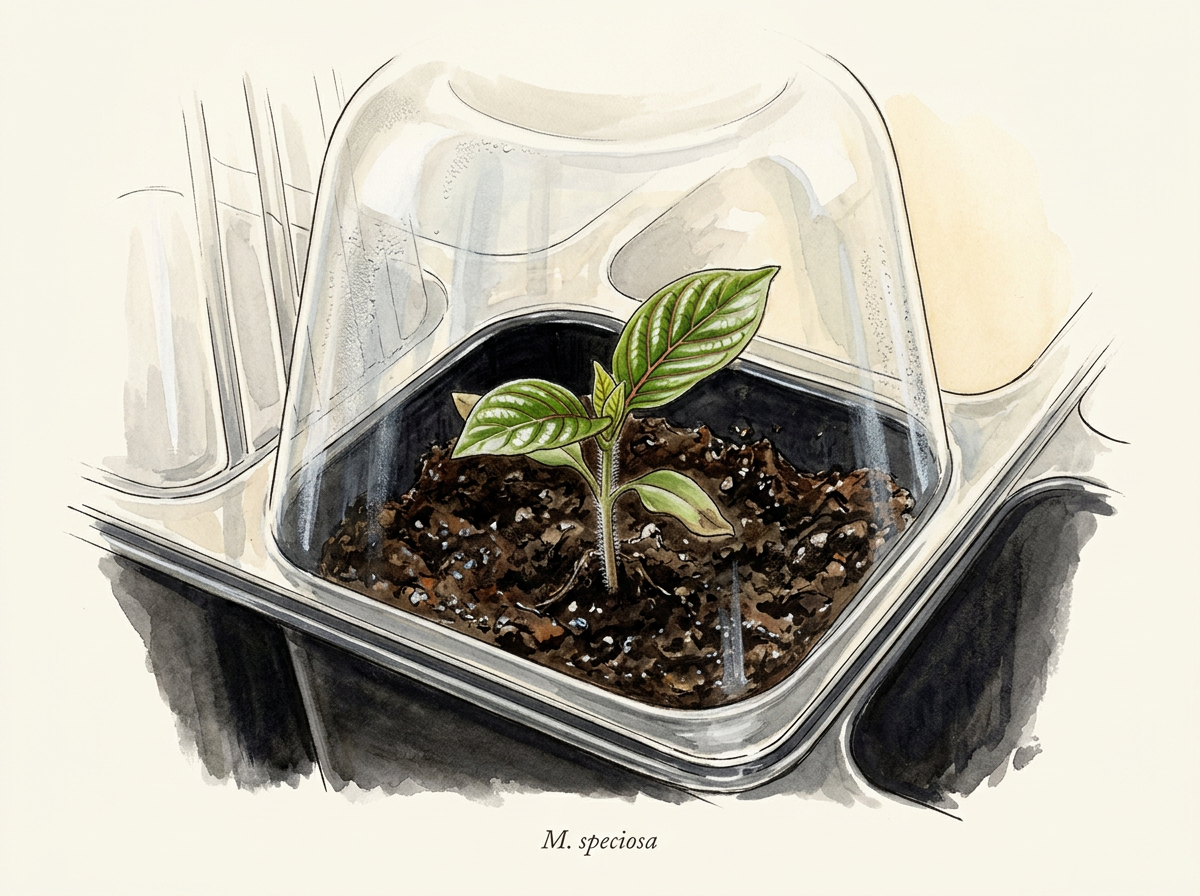
- Place it in a warm, humid spot — a clear bag tent or humidity dome helps.
- Water only if the soil is dry; avoid fertilizing for a few weeks.
- Expect some leaf drop from shipping stress; new growth is the sign of recovery.
Quarantine new plants
Keep a new arrival away from other houseplants for two to three weeks and check leaf undersides for pests. UC IPM notes that spider mites, aphids and scale are common indoor pests, and catching them early is far easier than treating an established infestation. See kratom pests and diseases.
After purchase: setting up for success
A new plant needs the right home: warmth of 75–90°F (24–32°C), humidity around 60–80% while it settles, bright light and rich, well-draining soil. The indoor growing guide and the complete grow guide cover everything that comes next.
Frequently Asked Questions
Is it better to buy kratom seeds or a plant?
For most beginners, a rooted plant is better. Seeds are inexpensive but lose viability quickly and often germinate poorly.
Can I buy a kratom plant from a private grower?
Yes, where kratom is legal. Private growers can be good sources; ask about the plant's origin, roots and health, and inspect it in person if possible.
Will a nursery ship kratom plants to any state?
No. Reputable sellers do not ship to states that ban kratom, and some also avoid cities or counties with local restrictions.
Sources
- Extension Gardener Handbook, Chapter 13: Propagation (opens in a new tab) — NC State Extension
- UC IPM Pest Notes (Spider Mites 7405, Aphids 7404, Scales 7408) (opens in a new tab) — University of California Statewide Integrated Pest Management Program
- Aeroponics enables consistent cutting propagation of kratom (Mitragyna speciosa): impacts of photoperiod, cultivar, and rooting hormone (2025) (opens in a new tab) — Frontiers in Plant Science
- Kratom Licensing (Rhode Island Kratom Act, effective April 1, 2026) (opens in a new tab) — Rhode Island Department of Health
- Metro Beer Permit Board reminds businesses: Tennessee kratom ban effective July 1, 2026 (opens in a new tab) — Metropolitan Government of Nashville and Davidson County
- Common grower experience (not a formal study) — Practices widely reported by hobby and nursery growers; treat as practical guidance rather than research findings
Written and reviewed by the Editorial Team. See editorial standards.
Related Guides
All guidesIs It Legal to Grow Kratom in the US? Federal and State Rules (2026)
In most states, yes; kratom is not federally controlled, but Alabama, Arkansas, Indiana, Tennessee, Vermont and Wisconsin ban it.
Read guideHow to Grow Kratom From Seed: Germination Step by Step
Use very fresh seed, surface-sow it on fine moist mix, and keep it warm, humid and lit under a dome.
Read guideHow to Clone Kratom From Cuttings: Step-by-Step Propagation Guide
Take a healthy stem cutting, trim the leaves, optionally dip in rooting hormone, and keep it warm and very humid with about 14 hours of light until it roots.
Read guide