Getting Started
Is It Easy to Grow Kratom? Seeds vs. Rooted Plants
Editorial Team Last updated
This page contains affiliate links. If you buy through them, the site may earn a commission at no extra cost to you.
Quick Answer
Kratom is moderately difficult to grow. Starting is the hard part: seeds lose viability fast and cuttings need high humidity to root. Once a young tree is established in warm, humid, bright conditions, it grows vigorously and is fairly forgiving, though cold and dry air remain constant risks outside the tropics.
Key Facts
| Overall difficulty | Moderate (hard start, easier later) |
|---|---|
| Hardest stage | Germination and rooting cuttings |
| Easiest stage | Established young tree in warm months |
| Biggest risks | Cold, dry air, overwatering, spider mites |
| Best for | Patient growers with houseplant experience |
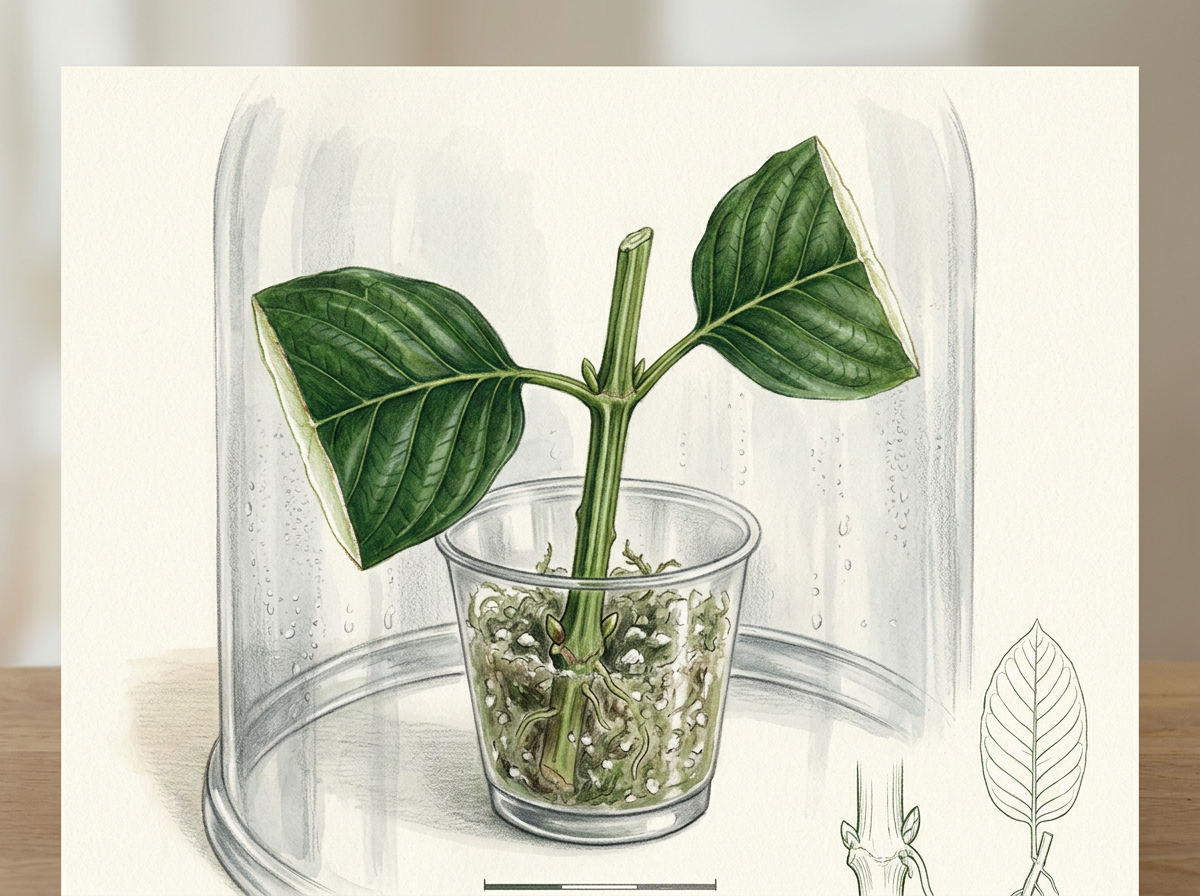
Is it easy to grow kratom (opens in a new tab)? The honest answer is “it depends on the stage.” Getting a kratom plant started is genuinely difficult, because seeds are short-lived and cuttings demand near-constant humidity. But once a young tree has an established root system and lives in steady warmth, it is vigorous and surprisingly forgiving. Most growers would rate the overall project as moderate — harder than a pothos, easier than an orchid collection.
Before starting: a practical checklist
A rooted plant simplifies propagation, but it does not remove the need for a suitable growing environment. Before ordering a plant, a grower should be able to answer these questions:
- Is growing permitted locally? Start with the US growing-law guide, then verify current state and local requirements.
- Is a warm, bright space available? The indoor growing guide explains the setup for a container-grown tree.
- Can humidity and watering be monitored? Review watering and humidity before choosing equipment.
- Is there a cold-weather plan? The overwintering guide covers care when outdoor conditions become unsuitable.
A grower still choosing a starting plant can compare options in the plants and seeds buying guide. A grower with the setup ready can follow the complete growing guide.
Difficulty by stage
Starting from seed: hard
Kratom seeds are tiny and lose viability quickly after harvest. University of Florida and Oregon State researchers working on kratom propagation describe low seed viability and poor germination as key reasons commercial growers rely on cuttings. Even experienced gardeners often see only a small fraction of seeds sprout. See how to grow kratom from seed for the best-practice method.
Rooting cuttings: moderate to hard
Cuttings root more reliably than seeds germinate, but they need high humidity, warmth and clean conditions. A 2025 study found rooting success in greenhouse mist systems ranged from 7% to 98% depending on season, while aeroponic systems produced consistent results of 85–92%. Those research results do not establish a success rate for a home humidity dome. The cloning guide explains how to tip the odds in your favor.
Young established tree: easy to moderate
Once a rooted plant is growing new leaves in a pot, care becomes much simpler. Water regularly, keep humidity reasonable, feed during warm months, and watch for pests. This is the stage where most growers start to enjoy the process.
Mature tree: moderate
Large trees are vigorous but present practical challenges: heavy pots, height management, high water use, and moving the tree indoors for winter in cold regions.
What makes kratom challenging
- Humidity: Kratom prefers 60–80% humidity, while many homes sit at 20–40% in winter.
- Cold sensitivity: Growth slows in the low 60s°F and frost is usually fatal.
- Water balance: The tree is thirsty, yet soggy soil causes root rot.
- Pests: Dry indoor air attracts spider mites.
- Patience: The tree needs years, not months, to reach a substantial size.
What makes kratom easier than expected
- Vigor: Healthy trees grow quickly in warm conditions and recover well from pruning.
- Clear signals: Leaves droop, curl or yellow quickly when something is wrong, which makes problems easy to spot early.
- No dormancy: Care is consistent year-round; there is no dormant season to manage.
- Simple equipment: A humidifier, a grow light and a good potting mix solve most problems.
How to make it easier on yourself
- Start with a rooted plant. Skipping germination removes the most frustrating stage. The guide to buying kratom plants and seeds explains what to look for.
- Measure, don't guess. A digital hygrometer and thermometer remove guesswork.
- Use a breathable pot. Fabric pots dramatically reduce overwatering problems.
- Start in spring. Warm months give a new plant time to establish before winter.
- Keep a grow journal. Notes on watering, feeding and growth help spot patterns.
Who should try growing kratom?
Growers who already keep tropical houseplants alive — fiddle-leaf figs, calatheas, citrus — usually adapt quickly. Complete beginners can succeed too, but should expect a learning curve and start with a rooted plant rather than seeds. Anyone living in USDA zones 10–11 has a major advantage, because the tree can live outdoors year-round. See the kratom grow zone guide to check your region.
A realistic first-year picture
A typical first year with a rooted cutting looks like this: a few weeks of adjustment and slow growth, a strong summer flush with several new leaf pairs, some leaf drop or browning as the grower learns the watering rhythm, and slower growth indoors through winter. By the second spring, most growers have a sturdy young tree and a much better feel for its needs.
Starting the plant vs. understanding the plant
Many first-time growers come to the tree with little background on kratom itself. Learning the basics — the trade vocabulary, how quality is judged and how products are tested — makes it easier to evaluate growing information too. This site sticks to horticulture, but background reading on how quality is judged and how kratom is regulated in each state (opens in a new tab) helps put a home grow in context.
The bottom line
Kratom is not a set-and-forget houseplant, but it is far from impossible. The difficulty is front-loaded: once the starting hurdles are cleared and the environment is stable, the tree largely takes care of itself. For a full step-by-step overview, read the complete guide to growing kratom.
Real kratom reference photos
These credited photographs show different plants, not a before-and-after sequence or an Editorial Team grow diary. Their exact ages and growing conditions are not documented here.
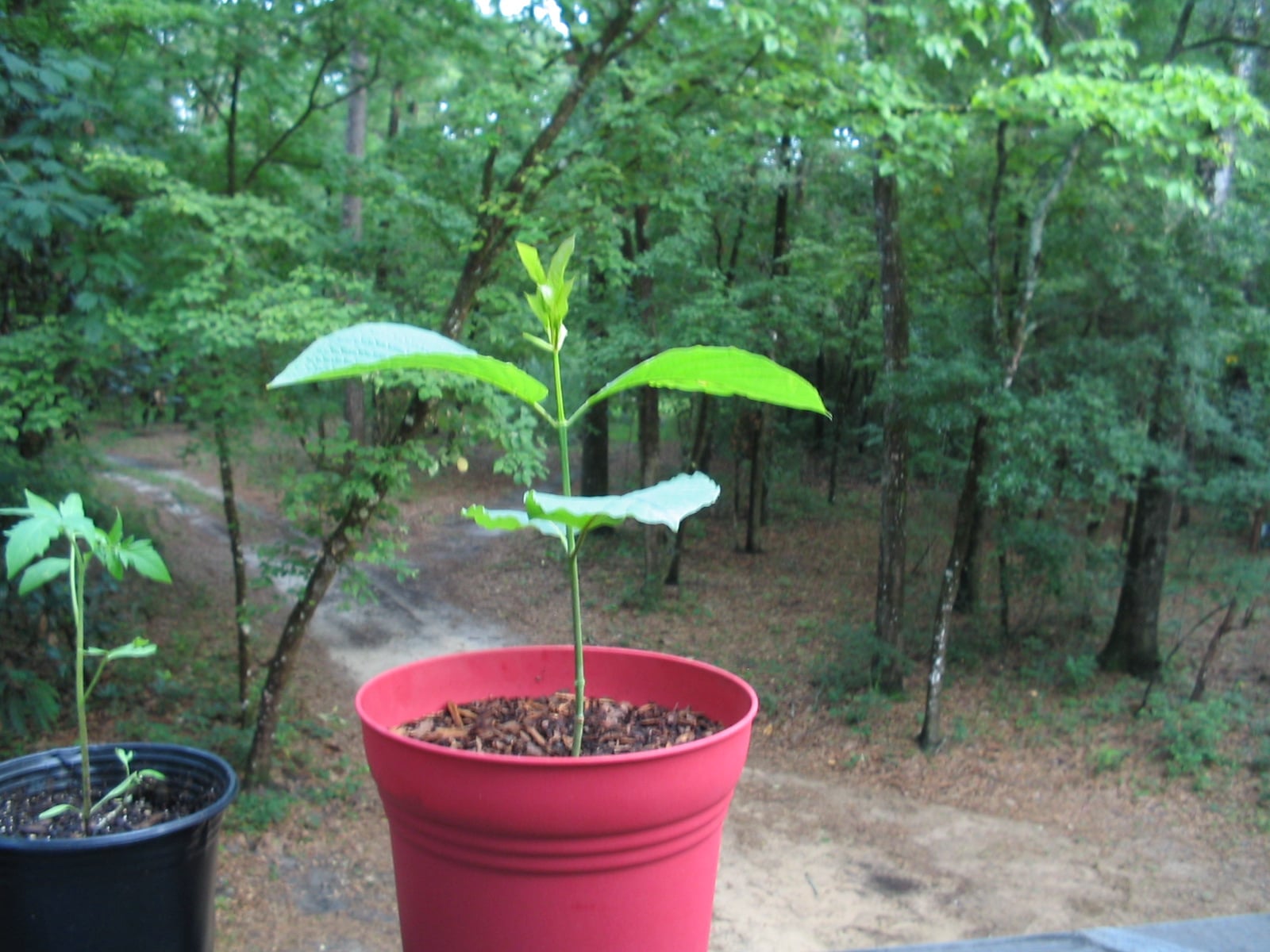
Young potted plant: the kratom sapling is in the red pot; the plant at the left is not identified.
Photo: Uomo vitruviano / Wikimedia Commons (opens in a new tab). CC BY-SA 3.0 (opens in a new tab). Resized for display; not cropped.
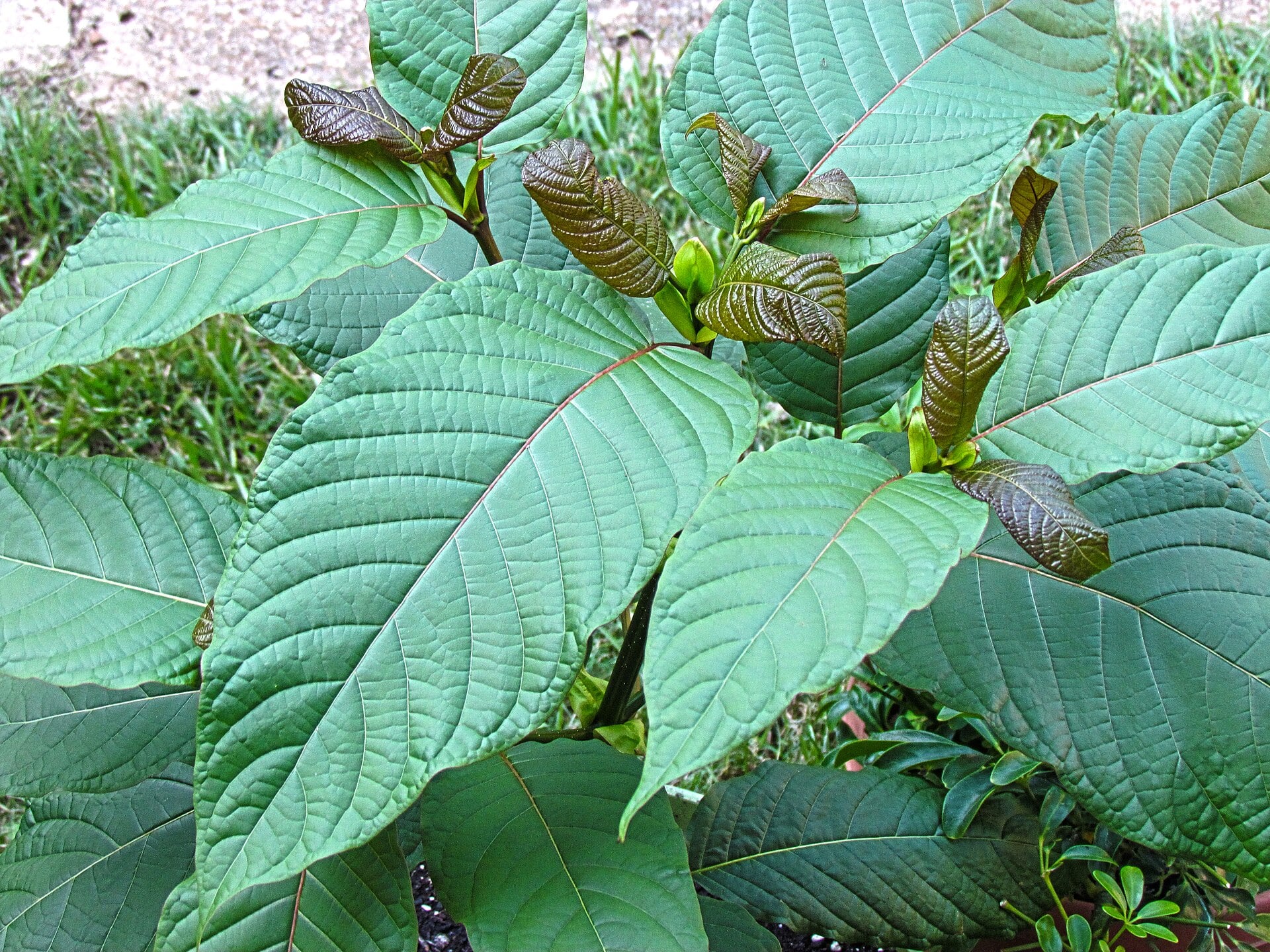
Foliage detail: established leaves and reddish new shoots. Leaf size does not establish the age of this plant.
Photo: ThorPorre / Wikimedia Commons (opens in a new tab). CC BY 3.0 (opens in a new tab). Resized for display; not cropped.
Frequently Asked Questions
Is kratom harder to grow than other houseplants?
Generally yes. It needs higher humidity, more warmth and more water than most common houseplants, and it grows into a large tree. Growers with tropical plant experience usually adapt quickly.
What is the hardest part of growing kratom?
Getting started. Seeds lose viability quickly and cuttings need sustained high humidity to root. Starting with a rooted plant avoids most of this difficulty.
Can beginners grow kratom?
Yes, especially by starting with a rooted plant in spring, using a humidifier and hygrometer, and planting in a breathable fabric pot with airy soil.
Sources
- Aeroponics enables consistent cutting propagation of kratom (Mitragyna speciosa): impacts of photoperiod, cultivar, and rooting hormone (2025) (opens in a new tab) — Frontiers in Plant Science
- Plant growth and phytoactive alkaloid synthesis in kratom [Mitragyna speciosa (Korth.)] in response to varying radiance — Zhang et al., PLoS ONE 17(4): e0259326 (2022) (opens in a new tab) — PLoS ONE
- USDA Plant Hardiness Zone Map (opens in a new tab) — USDA Agricultural Research Service
- Common grower experience (not a formal study) — Practices widely reported by hobby and nursery growers; treat as practical guidance rather than research findings
Written and reviewed by the Editorial Team. See editorial standards.
Related Guides
All guidesHow to Grow Kratom: The Complete Seed-to-Tree Guide
Keep it warm, humid and bright, in rich acidic soil that never dries out — and be patient for years.
Read guideHow to Clone Kratom From Cuttings: Step-by-Step Propagation Guide
Take a healthy stem cutting, trim the leaves, optionally dip in rooting hormone, and keep it warm and very humid with about 14 hours of light until it roots.
Read guideBuying Kratom Plants and Seeds: Nurseries, Private Growers and What to Check
Buy a rooted plant or cutting from a nursery that ships legally to your state; seeds are cheap but often fail because they lose viability fast.
Read guide